Wales Energy performance and calculation methodologies
Home energy guide template
Library captured 10 September 2026 · Source updated 29 August 2026
Home Energy Guide Template
#Source page 1

Home Energy Guide Template
#Source page 2
Explanatory Note for Home Builders and Developers:
This Home Energy Guide Template provides guidance to support applicable paragraphs contained in Approved Document F (Ventilation), Approved Document L (Conservation of Fuel and Power) Volume 1 Dwellings, and Approved Document O (Mitigation of Overheating Risk) in Wales. It is intended to assist builders and developers of new homes in fulfilling the requirements of the Building Regulations in preparing Home Energy Guides.
A Home Energy Guide should be provided to the owner when a new dwelling is completed. The Home Energy Guide should contain non-technical advice on how to operate and maintain the home in a healthy and energy efficient manner in a suitable form to be understood by the occupants. Some developers or home builders may already be providing this information via a home user guide. If a home user guide contains this information then a separate Home Energy Guide is not required.
In its entirety, the information contained in a Home Energy Guide should explain the basic operating principles of the energy systems installed within a home for the following topics:
• ventilation
• heating and domestic hot water
• renewable energy [if applicable], and
• staying cool in hot weather.
In addition, simple annotated floor plans, external elevations and roof layouts of the dwelling may be provided showing the locations of key equipment for easy identification by the owner/occupants, such as for example MVHR units, air source heat pumps, heat interface units, heating system circulation pumps, control units, room thermostats, heating timers, hot water storage tanks, PV panels, energy meters, and so on. It is expected that operating and maintenance instructions from manufacturers relevant for healthy and energy efficient operation of the home for installed passive ventilation (including trickle vents, or other background vents), mechanical ventilation, windows, solar shading devices, appliances, equipment and controls will also be provided to the owner as part of the information package.
This guidance is provided in the form of a template with example text that a builder or developer may choose to incorporate within the information provided to the owner. If applicable, the example text helps explain the principles of the energy systems installed within a home. If needed, the template text may be adjusted to suit the home being described, or text that is not relevant may be deleted. This template example covers the minimum topic areas named above that should be covered in the Home Energy Guide.
Introduction
#Source page 4
This Home Energy Guide for your new home has been provided by [insert home builder/developer name]. The guide is intended to help you better understand the energy systems within your home to help you stay warm in the winter and cool in hot weather, while keeping your bills as low as possible. It is important however that this document does not replace manufacturers’ instructions for these systems which should always be followed.
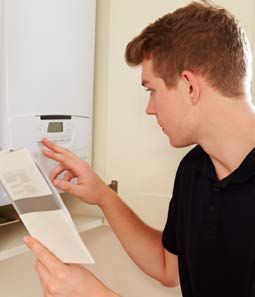
New homes in Wales are being designed and built to use less energy and to emit lower quantities of greenhouse gases (including carbon dioxide) than existing homes. In addition to being well-insulated and less draughty (when compared to older homes), they may now also include systems that were uncommon in earlier homes, including how they are ventilated. This guide gives advice on topics with which you may be unfamiliar with compared to your experiences in previous homes. It covers the following topics:
• ventilation
• heating and domestic hot water
• renewable energy, [delete if not applicable] and
• staying cool in hot weather.
Alongside this guide, the original manufacturers’ operating and maintenance instructions have been provided to you separately. Contact details for recommended professional installers should also be given to you for use in emergencies and to ask them to carry out normal maintenance. Some owners/occupants may choose to carry out simple but important routine maintenance tasks for themselves, such as cleaning dust and debris from air inlets and outlets, changing air filters, and bleeding radiators (in line with manufacturer’s instructions). These simple actions will help to ensure energy use is kept to a minimum and systems operate effectively.
Ventilation
#Source page 5
Ventilation in your home is provided for three reasons: The first is to supply fresh air for the occupants. The second is to help to ensure good indoor air quality, which needs removal of enough moisture, odours, and other indoor pollutants. The third purpose is to help to maintain good thermal comfort; ventilation air flows help heat to mix from different sources, so it circulates throughout your home, especially from the central heating system during cold periods. The different parts of the ventilation system work together to allow fresh air throughout your home. During hot weather periods, ventilation can remove excess heat from your home – See the ‘Staying Cool in Hot Weather’ section below for guidance about this.
Poor levels of ventilation along with excess moisture in the indoor air can contribute to mould growth, so it is important to use the ventilation provided to keep your home ‘fresh’ and to remove moisture at source, particularly from shower rooms, bathrooms and kitchens. To limit excess moisture in the indoor air and condensation in your home, the following tips may be helpful:
• avoid drying clothes indoors, especially on radiators
• if you have one, make sure your tumble dryer’s venting duct leads outside (unless it is a self-condensing dryer)
• [Builder/developer to delete if not applicable] reduce moist air spreading around your home by using local extract fans keeping internal doors closed when cooking, bathing, or showering
• [Builder/developer to delete if not applicable] reduce moist air spreading around your home by using boosted mechanical extract ventilation keeping internal doors closed when cooking, bathing, or showering
• [Builder/developer to delete if not applicable] reduce moist air spreading around your home by using boosted MVHR keeping internal doors closed when cooking, bathing, or showering.
Important note: [Even if no combustion appliances are installed in the home when new, this paragraph should be retained to allow for future retrofits.] Separate, permanently open ventilation grilles (called combustion vents) may be installed in your home to supply air for certain gas appliances, solid fuel stoves, or other combustion appliances. These combustion vents must always be left open by law to allow sufficient air in for complete combustion and these should never be blocked. Without such combustion vents, or if blocked, carbon monoxide gas may be released which can be deadly.
Page 6
#Source page 6
Modern gas boilers, stoves and gas appliances may have sealed air inlets, so they draw air directly from the outside. If in doubt, check with a professional registered engineer; Gas Safe-registered for gas, HETAS for solid fuel, or OFTEC for oil, and never block such combustion vents. Further information on detecting and preventing carbon monoxide can be found on the following web link:
https://gov.wales/carbon-monoxide-poisoning- leaflet
[Ventilation will typically be provided in one of three ways – Builder/developer to provide details of the ventilation system – Include the system name and if applicable the description from (a), (b), or (c) below, delete the other two, and adapt the description as required.]:
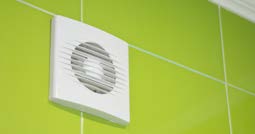
a) Natural ventilation: Ventilation in your home has been provided using boost only extract fans in shower rooms, bathrooms and kitchens, with trickle vents in all window frames, and openable windows. Trickle vents are small openings fitted within all window frames in your home, which allow background ventilation air flows to help to maintain good indoor air quality. Local extract fans in shower rooms, bathrooms and kitchens (in a non-recirculating cooker hood) provide ventilation air flows to remove high amounts of moisture, odours and other indoor pollutants using fans powered by electricity. These will often come on with the light switch and stay on for a timed period after the light has been turned off, and are also humidity controlled. [Adjust the previous sentence as required to reflect how the fans are controlled.] Opening windows allow for additional ventilation when needed. To allow air to circulate around your home you may have noticed that all the doors have gaps underneath them – Do not block these gaps as it will stop air flowing between rooms to those with extract fans and between rooms when trickle vents are open.
b) Mechanical extract ventilation: Ventilation in your home has been provided using continuous mechanical extract ventilation from shower rooms, bathrooms and kitchens, with trickle vents in most window frames, and openable windows. Trickle vents are small openings fitted within all window frames except for in shower rooms, bathrooms and kitchens. When open, these allow background ventilation air flows to help to maintain good indoor air quality. Continuous mechanical extract ventilation from shower rooms, bathrooms and kitchens (sometimes via a non-recirculating cooker hood) provides background ventilation air flows to remove moisture, odours, and other indoor pollutants from your home, with fresh air supplied through trickle vents. This type of system is intended to run continuously using fans powered by electricity and should only be switched off if they are being worked on by a professional installer. Each fan can also be switched to boost mode to temporarily increase the ventilation air flows when needed. Opening windows allow for additional ventilation when needed. To allow air to circulate around your home you may have noticed that all the doors have gaps underneath them – Do not block these gaps as it will stop air flowing between rooms to those with extract fans and between trickle vents.
Page 7
#Source page 7
c) MVHR: Ventilation in your home has been provided using mechanical ventilation with heat recovery and openable windows. Mechanical ventilation with heat recovery (MVHR) systems extract air from shower rooms, bathrooms and kitchens (sometimes via a non-recirculating cooker hood), supply air to the living room and bedrooms, and so provide continuous background ventilation air flows to remove moisture, odours, and other indoor pollutants from your home. This type of system is intended to run continuously at all times using fans powered by electricity and should only be switched off if it is being worked on by a professional installer; it can also be boosted to increase the ventilation air flows when needed. Heat recovery means that the warm air exhausted from rooms in your home is sent through a heat exchanger (in the MVHR unit) which transfers most of its warmth into the fresh air coming into your home. This means you can have plentiful fresh air ventilation while losing little heat. Your heating system will therefore not have to work to replace the heat normally lost to ventilation which should make your home less costly to run. (With certain models, it may be possible to switch the MVHR unit to a ‘summer bypass mode’, so that incoming fresh air does not pass through the heat exchanger and so is not pre-warmed. This may happen automatically, via a manual switch, or sometimes via an app on a smart phone. Please refer to the manufacturer’s instruction manual. – See below for guidance about keeping your home cool during hot weather periods.) Opening windows allows for additional ventilation when needed. To allow air to circulate around your home you may have noticed that all the doors have gaps underneath them – Do not block these gaps as it will stop air flowing between rooms to those with extract fans.
Some practical tips on using ventilation provisions in your home are listed below: [Builder/developer to edit according to whether type (a), (b), or (c) above is installed]
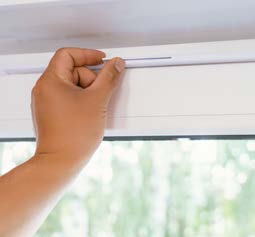
• [applicable to ventilation system type (a) or (b) above; delete for type (c)] When fitted in your home, trickle vents should be open to provide background ventilation. Trickle vents can be closed to limit cold draughts at certain times, or within rooms you are not using and heating, but remember to open them again at other times. Permanently closing trickle vents could over time contribute to your home to becoming unhealthy and damp. Openings in trickle vents should be cleaned at least once per year to ensure air can flow freely through them, including internal grilles if these are present.
• [applicable to ventilation system type (a) above; delete for types (b) or (c)] For local mechanical extract fans (fitted in shower rooms, bathrooms and kitchens), all the ventilation inlet and outlets should be checked regularly to ensure they are not blocked with dust or other debris. They should be maintained by a professional installer according to the manufacturer’s instructions.
• [applicable to ventilation system type (b) or (c) above; delete for type (a)] Do not permanently turn off mechanical ventilation systems. If you feel draughts when these types of system are running, first of all check if boost mode has been left turned on, and if needed change this back to normal mode. If you permanently turn off mechanical ventilation systems, your home will be poorly ventilated, high moisture levels may cause mould growth or timber rot, and you will potentially expose the occupants of your home to harmful levels of indoor air pollutants.
Page 8
#Source page 8
• [applicable to ventilation system type (b) or (c) above; delete for type (a)] Use boost mode for mechanical extract ventilation/MVHR systems [delete as applicable] to rapidly remove excess moisture or odours. If your system does not have an automatic boost period (auto off), remember to turn off boost mode when this is no longer needed. Prolonged use of boost mode is likely to be noisy, could cause draughts, and will use more electricity than is necessary.
• [applicable to ventilation system type (c) above; delete for types (a) or (b)] Mechanical ventilation with heat recovery (MVHR) systems include an air filter that must be changed regularly (usually at least once per year, but check the manufacturer’s instructions). If the air filter is not changed regularly, it will become blocked, which will result in poor ventilation, increased electricity use and noise, and may shorten the life of the fans installed in the MVHR system.
• [applicable to ventilation system type (b) or (c) above; delete for type (a)] If fitted in your home, continuously running mechanical ventilation systems are intended to be quiet when running. To limit increases in noise from the system over time, ensure the system is regularly maintained by a professional installer according to the manufacturer’s instructions.
• [if fitted, applicable to ventilation system type (a), (b), or (c) above] The filter within a cooker extract hood must be changed regularly according to the manufacturer’s instructions. After long-term use, grease and other deposits from cooking can block such filters causing poor performance and increased energy use. Routine cleaning of the initial wire grease filter will help keep the hood extractor operating efficiently. Check the manufacturer’s instructions, but this is normally done by just including the filter with your washing up.
Heating and Hot Water Systems
#Source page 9
To live comfortably in your home, you need two forms of heat. The first is hot tap water, which is also known as ‘domestic hot water’ and is needed all year round. The amount of hot tap water your home needs however is entirely dependent on the behaviour of the people living there. The second is space heating (with heat provided via radiators or underfloor heating for example), which is only needed when your home is feeling cold. As we now build new homes in Wales to lose far less heat to the outside than before, far less space heating is required. Until the weather becomes really cold, the heat given off by appliances, electrical equipment, lighting, heat gains from the sun and the people in your home may balance the heat it loses to the outside, meaning the space heating system may not need to come on. Space heating is normally delivered by a central heating system.
Wet Central Heating Systems
[The example text in this section does not apply to central heating systems that use warm air (not water) to circulate heat around the home.]
Your new dwelling is provided with a wet central heating system heated by a gas boiler/electric boiler/air source heat pump/ground source heat pump [Delete as appropriate]. Domestic hot water for taps and appliances is provided by … [builder/developer to explain how this is provided].
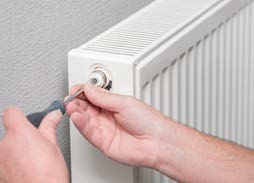
The heating system uses radiators/underfloor heating [delete as appropriate] to circulate heat around your home.
Radiators [delete if not installed]: As your home is built to lose far less heat than you may have been used to, you may notice that the radiators may be less hot to the touch. Running radiators warm rather than hot helps keep your home running efficiently. As the weather becomes colder the length of time the heating system operates for may become longer. This is more efficient than turning up the temperature and running for short periods, especially if your home has a heat pump system (see below).
Underfloor Heating [delete if not installed]: Underfloor heating is an alternative to radiators and can be an energy efficient way to heat a home. When set to run correctly, the floor should feel slightly warm and not cold. Wall thermostats will automatically control when the floor heating needs to come on and once set up, this should not require adjustment. Underfloor heating operates gently and slowly. This means it may take longer to heat up your home than you are used to after the heating has been turned down, for example while you have been away. Do not be tempted to turn up the temperature of the floor as this may lead to your home overheating.
Page 10
#Source page 10
Corrosion and scale build-up in a wet central heating system can decrease its efficiency making it more expensive to run, increase the risk of component failures and shorten the life of the system. The system installed in your home helps to prevent these. Some practical tips about these issues to discuss with your professional installer during routine maintenance, repairs, or system replacement are listed below:
• Before fitting a new replacement boiler or heat pump, the wet central heating system in your home should be thoroughly cleaned and flushed by your professional installer. During final filling of the system, a chemical water treatment formulation should be added by them to control corrosion and the formation of scale and sludge in the heating system pipework. Your installer should also refer to the boiler or heat pump manufacturer’s instructions for appropriate treatment products and special requirements for individual models.
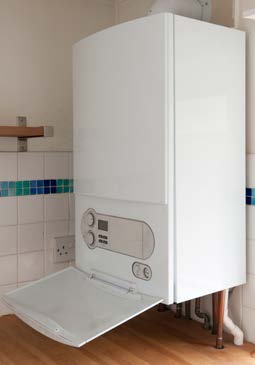
• The water supplied from the mains varies between different locations, and is referred to as hard or soft depending on the water alkalinity. If your local mains supplies hard water (you can ask your professional installer or water utility for this information), provision should be made by your professional installer to treat the feed water to water heaters, the hot water circuit of combination boilers (combination boilers provide heat for both the central heating system and hot water supplied to taps), or heat pumps, to reduce the rate of accumulation of limescale. example image – please use image of products located on site iffipossible
• Naturally soft waters (of low alkalinity), or water supplied via a ‘base-exchange resin water softener’, have an increased potential for corrosion, and, if they are used in any central heating system, a corrosion inhibitor specifically formulated for the purpose should be added by your professional installer and properly maintained. If necessary, your installer should consult the manufacturer for specific advice for your locality, and they should pay close attention to inhibitor dosage levels.
Heat Pumps
[In this section it is assumed that an air source heat pump is installed – builder/developer to adapt or delete as appropriate]:
Heat pumps are electrically-powered devices that move heat from one place at one temperature, to another place at a different temperature using special gases. (They are different from traditional boilers or direct electric heating, and supply heat in a very different way.) For many years, almost every home has contained a heat pump installed as part of a fridge – A heat pump moves heat from inside the fridge to outside the fridge. This makes the inside of the fridge colder, and the element on its back warmer. Using a heat pump to heat a home is similar, except it takes heat from outside the home and moves it inside.
Page 11
#Source page 11
Whereas the efficiency of gas boilers is generally tolerant to how they are run, heat pumps need to be set up and used carefully to avoid being inefficient. However, as heat pumps are powered by electricity, and this is increasingly being generated renewably, heat pumps are key to reducing our reliance on fossil fuels in Wales for heating homes. A heat pump can also deliver heat more efficiently than direct electric heating (for example immersion or storage heaters), which can make the running cost similar to a gas boiler.
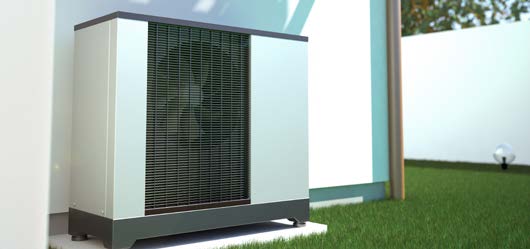
There are two sorts of heat pump normally used for heating homes: air source or ground source. An air source heat pump (ASHP) usually contains all parts of the heat pump in an outdoor box, called a mono block system. This takes heat out of the air outside and uses it to circulate hot water into your home. The other kind, a ground source heat pump, takes heat out of the ground via long pipes either laid in the soil or placed in deep holes sunk near your home. Both sorts normally put heat into a hot water cylinder and space heating system inside your home.
ASHPs work most efficiently when they are running reasonably continuously, instead of regularly switching them on and off. For efficient use, the ASHP should not be switched off completely to control the indoor temperature in your home. Instead time should be spent setting up the system for long run times and then the system left to operate by itself. You can set the thermostat(s) to a lower temperature when your home is unoccupied. For example, if you normally set the thermostat to 20°C for when you are at home during the day, this could be lowered to 15°C at other times, such as when your home is unoccupied. In modern, well-insulated homes, the indoor temperature will remain reasonably constant even while the central heating system is not running. Modern smart thermostat systems may also learn how long it takes your home to warm up, so in colder weather these may ask the heating system to come on early so your home is warm for the time you have asked. Some practical tips about the ASHP in your home are listed below:
• If fitted in your home, an ASHP is intended to be quiet when running. To limit increases in noise from the ASHP over time, ensure it is regularly maintained by a professional installer according to the manufacturer’s instructions.
Page 12
#Source page 12
• Regularly clean away leaves and other debris from the air intake and outlet located on the outdoor unit outside your home. If the air inlet or outlet becomes blocked, the ASHP will not work efficiently, it will use more electricity than is necessary, and it may even not provide enough heat to your home.
• Ask a professional installer to change any air filters on the outdoor unit regularly according to the manufacturer’s instructions.
Renewable Energy
#Source page 13
[delete this section if renewables not installed]
Photovoltaic Panels
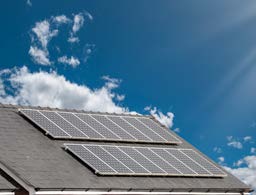
Photovoltaic (PV) ‘solar’ panels generate electricity in daylight hours and harvest the greatest amount in full sunshine. The PV panels are mounted on the roof of your home. Your home can use electricity generated by PV panels immediately as it is generated, or it can be stored in a battery for later use (if one is fitted in your home). Both of these can reduce your total electricity bill.
At times the PV panels may harvest more electricity than your home can use immediately or store in a battery (if one is fitted). At these times the electricity will automatically be pushed (exported) back to the national grid. You may make an arrangement with your electricity supplier, so you can receive payments when electricity from the PV panels is exported from your home to the national grid.
Some practical tips about the PV panels in your home are listed below:
• PV panels work best during the spring, summer and autumn, when the sun is strongest and daylight hours are longest. However, they also work to a lesser extent during the winter, particularly on sunny days.
• PV panels should be cleaned regularly (typically once a year) to aid efficiency. It is recommended to ask a professional cleaner to do this safely using appropriate cleaning products as recommended by the manufacturer and with equipment to avoid the need to carry out work at height.
• Except for cleaning, little maintenance is usually needed with PV panels. Ask a professional installer to check they are working correctly and safely as part of regular electrical checks to your home.
• The wiring connected to PV panels can cause electric shocks even when disconnected from the rest of your home. So, do not attempt to carry out work on PV panels yourself, and instead appoint a professional installer.
Staying Cool in Hot Weather
#Source page 14
Public Health Wales cautions that prolonged periods of extremely hot weather pose serious health risks. Further, they warn that excessive exposure to high temperatures can kill – Those most at risk include older people, very young children and people with certain pre-existing medical conditions. For guidance about this, please consult the following website, which includes advice on protecting yourself and your dependents:
https://phw.nhs.wales/services-and-teams/environmental-public-health/extreme-hot- weather/
During everyday living, you can take certain steps to reduce indoor temperatures during periods of hot weather to improve your comfort by using the built-in features of your home. This advice will also help to reduce health risks from high temperatures, but in addition you will need to follow the guidance given by Public Health Wales on protecting yourself and your dependents.
[Any measures used to mitigate overheating risk in compliance with Part O (Mitigation of overheating) and the ventilation system used for compliance with Part F (Ventilation) should be taken into consideration before including/completing the text below. Builder/developer to amend example text below as applicable]
There are several ways you can help to keep your home cool, and generally these can be combined. They include limiting heat from the sun entering your home through glazed windows, limiting heat from electrical appliances and devices, and electric lighting in your home, as well as increasing ventilation air flows using external doors and windows, mechanical ventilation or extract fans, and opening internal doors (except fire doors).
At all times, the following measures may be used to cool your home and its contents:
• If you can safely and securely leave any windows open overnight, doing so will allow ventilation to cool down your home and its contents using cooler night-time air.
• If possible, open internal doors (except fire doors), including overnight and when your home is empty. This will allow ventilation air to flow freely through your home.
• Electrical appliances and devices generate heat while they are in use, and this can increase indoor temperatures. If possible, turn them off at the wall socket when they are not needed, as even standby mode creates a small amount of heat.
• If it is safe to do so, turn off electric lighting in spaces where it is not needed. Even modern energy efficient lighting generates some heat while in use, and this can increase indoor temperatures.
Page 15
#Source page 15
• If there are blinds, shutters, sun covers or awnings fitted on the outside of your home, these should be used throughout the day to protect against too much heat from the sun entering your home. Indoor blinds or curtains can also be used, although they are not quite as effective at preventing heat from the sun entering your home. Whether inside or outside, shading should not block window openings from allowing ventilation air to flow through your home.
• [applicable to ventilation system type (a) or (b) above; delete for type (c)] If there are trickle vents fitted in window frames, open all of them and leave these open throughout the hot weather period, including overnight and when your home is empty. (Trickle vents are small openable purpose-provided openings fitted within the window frames in your home.)
• [applicable to ventilation system type (c) above; delete for type (a) or (b)] For ‘mechanical ventilation with heat recovery’ (MVHR) fitted in your home, the MVHR unit should be switched to ‘summer bypass mode’ (if available). The MVHR manufacturer’s instruction will advise you how to do this. This prevents the incoming air (from outdoors) being warmed by the extracted indoor air. (Remember to switch the MVHR unit back to normal operation after the period of hot weather has ended.)
At times of the day when the outdoor air is cooler than the air indoors (often in the late evening and overnight, but also when a building is already overheating), the following measures may be helpful:
• If safe and secure to do so, external doors, windows and other ventilation openings should be opened during the cool of early morning to allow stored heat to escape from your home and its contents – Openings on different walls allow cross-flow ventilation, and openings at different heights increase ventilation air flows, including openings on different storeys. If sash windows are fitted, open these so there is an opening gap both at the top and bottom of each opening light (or other windows designs that allow this).
• [applicable to ventilation system type (b) or (c) above; delete for type (a)] If your home has mechanical ventilation that runs continuously, make sure this is working normally at all times, including overnight and when your home is empty. You can use ‘boost mode’ to temporarily increase ventilation air flows at any time.
• [applicable to ventilation system type (a) above; delete for type (b) or (c)] Local individual extract fans in shower rooms, bathrooms and kitchens are not normally intended to run continuously, but these can also be used during hot weather to boost ventilation air flows.
At times of the day when the outdoor air is warmer than the air indoors, windows and other ventilation openings should not be completely closed, rather instead their openings should be reduced to allow lower background ventilation air flows. External doors should be closed, but internal doors (except fire doors) should be left open. This should help to keep rooms reasonably cool while still allowing adequate ventilation air flows for good indoor air quality. (Sufficient removal of moisture, odours, and other indoor pollutants is needed for good indoor air quality.) Mechanical ventilation or local extract fans should not be used to boost ventilation air flows if the outdoor air becomes warmer than the indoor air, except if needed for other normal indoor air quality reasons.
You can check the indoor and outdoor air temperatures using an ordinary thermometer, with the sensing bulb positioned in the free air, preferably away from hot or cold surfaces, and shaded from direct sunlight – It takes a few minutes for thermometers to show the correct reading. (This approach will not work for ‘infrared thermometers’ though, which generally measure temperatures of surfaces, not air temperatures.)
Page 16
#Source page 16
Mae’r ddogfen yma hefyd ar gael yn Gymraeg / This document is also available in Welsh
© Crown copyright 2022 WG43974 Digital ISBN 978-1-80391-619-4