
How to specify fencing
What a fencing clause has to settle, from fence type and post design to security rating and coatings, the BS 1722 parts to cite, and how to write it in CAWS and in Uniclass.
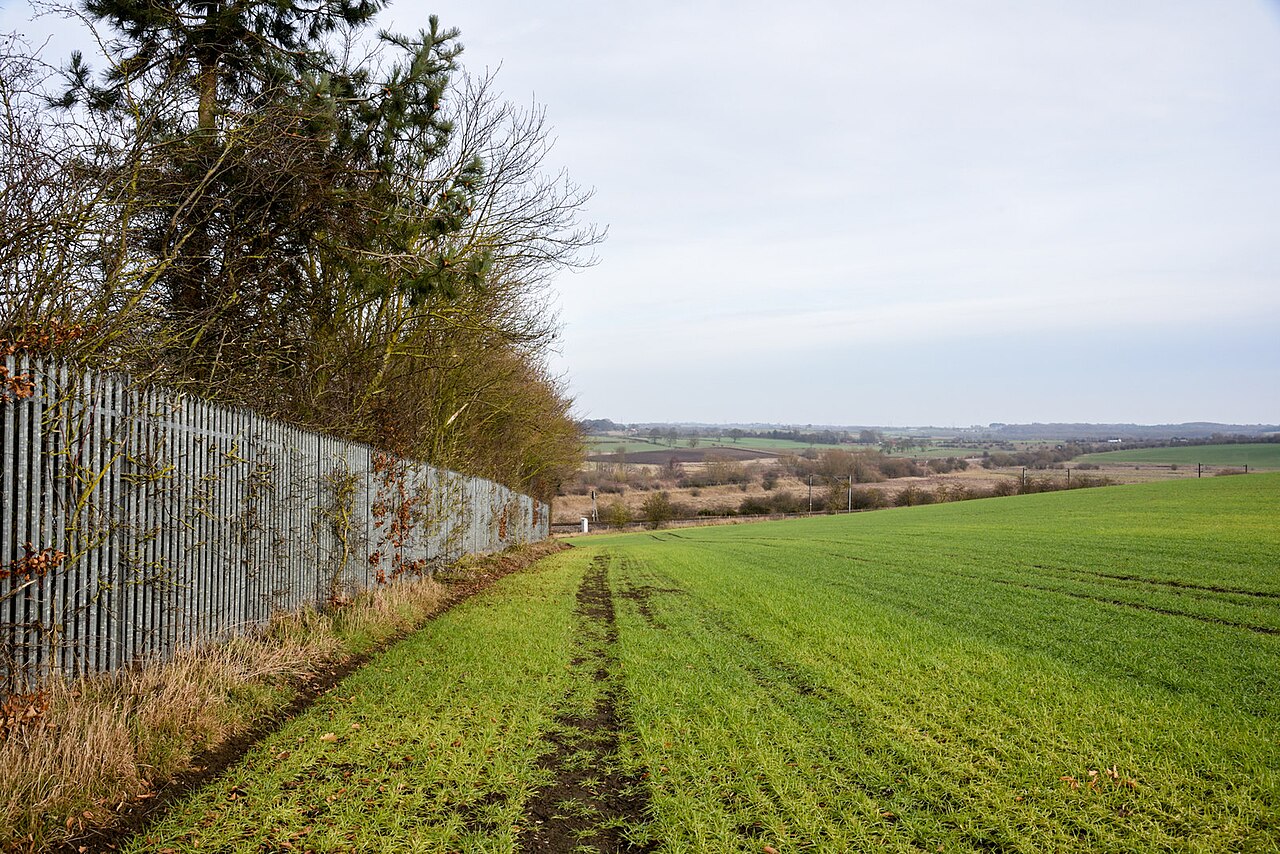
Photo: Trevor Littlewood, CC BY-SA 2.0, via Wikimedia Commons.

How do you specify fencing?
To specify fencing, choose the fence type first (welded mesh, steel palisade or timber) and cite the matching part of BS 1722, then state the height, the post size and foundation, and the corrosion protection. If the fence has a security function, name the LPS 1175 rating set by the security adviser rather than calling it a security fence. Gates, toppings and the line of the fence go on the drawings.
A fence clause looks simple and is often written in two lines: a product name and a colour. What actually goes wrong on site is the part nobody wrote down. Posts are sized for a sheltered garden and set in a fence line on an exposed edge. A palisade fence is called "security fencing" with no rating behind the words. Galvanized mesh is powder coated with no pretreatment and starts to flake within a few winters.
This guide is written around Uniclass Pr_25_71_50_19 Carbon steel welded mesh panels, the most common perimeter fence on commercial, school and residential schemes. The same decisions apply to steel palisade, Pr_25_71_50_16 Carbon steel palisade fence panels, and with different materials to timber fences such as Pr_25_71_57_83 Softwood palisade fence panels.
What does a fence clause need to cover?
Some properties are specific to fencing. Others belong in every product clause. A clause that leaves either out gives the contractor room to substitute.
Properties of fencing
- Security ratingNever guessLPS 1175 rating from the security adviser, or none.
- AccessoriesToppings, base plates, corner and end posts.
- Material gradeSteel grade for posts and wire to the BS 1722 part.
- Product typeTwin wire, V-mesh, palisade or bar panel.
- FixingsClamp bars and anti-tamper bolts at the attack face.
- FinishPowder coat colour as a RAL reference.
- Mesh or aperture sizeAperture sets climb resistance and what it keeps in or out.
- ProfileFlat twin wire or V-folded panel.
- Corrosion protectionGalvanized to BS EN ISO 1461 or wire coating, then powder.
- Support and framingNever guessPost section, spacing and foundation designed for wind load.
What every product clause needs
- Manufacturer and product referenceNamed fence system, or a performance description if open.
- Product standardThe BS 1722 part for the fence type.
- Installation methodBS 1722 installation clauses plus manufacturer's instructions.
- Technical submittalsPost and foundation calculations, coating data, LPS certificate.
- Operation and maintenance informationCoating repair method, spare panels, inspection of fixings.
- MaterialSteel wire mesh, steel palisade or timber.
- ThicknessWire diameter, e.g. 8/6/8 mm twin wire.
Uniclass Pr_25_71_50_19 Fencing. Not every property applies to every project; where one does not, say so rather than leaving it blank.
Fields marked Never guess (security rating and support and framing) depend on the project and should never be filled from a default or a previous job. If the information is not available yet, the clause should say so with a TBC and a reason.
Which decisions does the clause depend on?
Most properties follow from the product you choose. These depend on the project, so they need a decision from the designer before the clause is written.
- 01
Mesh, palisade or timber
Fence typeThe fence type sets everything downstream, including which part of BS 1722 applies. Welded mesh panels (Part 14) are see-through, hard to climb when the aperture is small and the default for schools, commercial sites and play areas. Steel palisade (Part 12) is cheaper per metre for industrial boundaries but looks hostile and is easier to climb than a fine mesh. Close-boarded and timber palisade (Part 5) and prefabricated wood panels (Part 11) give privacy for houses but need treated posts and will not last as long as galvanized steel.
How to decide
- Public realm, schools and play areas: welded mesh with a small aperture and no sharp toppings.
- Utility and industrial boundaries: steel palisade or mesh, depending on how visible the line is.
- Private gardens between houses: close-boarded or panel timber fencing with concrete or treated timber posts.
- Check the height against planning: under permitted development, a new fence next to a highway used by vehicles is limited to 1 m, or 2 m for a school, and 2 m elsewhere.
Write it asType: Welded mesh panel fence to BS 1722-14, twin wire 8/6/8 mm, aperture 200 x 50 mm, height 2.4 m. - 02
Posts, foundations and wind load
Never guessFence failures are nearly always at the posts. A mesh panel is light, but once it is covered by climbing plants, debris netting or a privacy screen it catches the wind like a board fence. BS 1722-14 includes a method for calculating wind loads on the posts and sets typical post foundations for general purpose fences. On exposed sites, on raised ground or where screening will be added later, that calculation needs doing for the actual site rather than taken from the catalogue. Base-plated posts on a wall or slab need the substrate checked as well.
How to decide
- Tell the fence designer if the fence will carry screening, signage, planting or ball-stop netting; each changes the wind load.
- Ask for post sizes, spacing and foundation depth to be confirmed by calculation for the site exposure.
- Where posts sit on a retaining wall or slab edge, coordinate base plates and anchors with the structural engineer.
- Show services and tree roots along the fence line, so post holes are not moved on site without review.
Write it asPosts and foundations: Post section, spacing and concrete foundation to be designed for site wind exposure to BS 1722-14. Submit calculations before ordering. - 03
Security rating
Never guess"Security fence" in a clause means nothing a contractor can price or check. Where the fence has a real security role, the measurable standard in the UK is LPS 1175, the Loss Prevention Certification Board test of delay against forced entry. Issue 8 of LPS 1175 rates a product by a threat level from A to H, based on the tools and number of attackers, and a delay in minutes. The rating applies to the tested assembly, so the posts, fixings and gate have to match what was tested. The rating itself should come from a security adviser or the client's risk assessment, not from the architect's judgement.
How to decide
- Ask whether the fence is a boundary marker, a deterrent or a delay barrier; only the last needs a rating.
- Get the required rating from the security adviser, police Designing Out Crime Officer or client brief.
- Specify the rating and require the LPCB certificate for the exact panel, post and fixing set supplied.
- Match any gates in the line to the same rating, or the gate becomes the weak point.
Write it asSecurity rating: LPS 1175 Issue 8 rating as security adviser's report, certified by LPCB for the complete fence assembly. Submit certificate. - 04
Galvanizing and powder coating
CoatingsSteel fencing needs a zinc coating to last outdoors. Fabricated posts and palisade are hot-dip galvanized after fabrication to BS EN ISO 1461; mesh panels are usually welded from pre-galvanized wire and may be galvanized again after welding. A polyester powder coat on top gives colour and adds life, but only if the galvanized surface is pretreated first. BS 1722-16 covers powder coatings used as a plastics finish to fence components and mesh, and is the reference to ask for. Cut ends and drilled holes made on site lose their protection unless they are repaired.
How to decide
- All external steel: galvanized as a minimum, whether or not it is also coated.
- Visible fences in public areas: galvanized and polyester powder coated, with the pretreatment stated.
- Coastal or chemical exposure: ask the manufacturer for the coating system and its expected life in that environment.
- Require site cutting to be avoided, and specify the repair method for any damage.
Write it asCorrosion protection: Hot-dip galvanized to BS EN ISO 1461, then polyester powder coated to BS 1722-16, colour RAL 6005. - 05
Aperture, wire size and climb resistance
ApertureMesh fences are described by wire diameter and aperture, for example 8/6/8 twin wire with a 200 x 50 mm opening, or 358 mesh with a 76.2 x 12.7 mm opening. A small vertical aperture gives no foothold or finger hold, so it resists climbing and cutting better. A larger aperture is cheaper and lighter but easier to climb. The aperture also matters for what the fence is meant to stop: balls on a sports pitch, small children at a pool or play area, and wildlife at the base of the fence.
How to decide
- General boundaries: twin wire 8/6/8 or 6/5/6 is usual.
- Higher climb resistance: a narrow aperture mesh such as 358, usually as part of a rated system.
- Play areas and pools: check the aperture against the operator's or play inspector's requirements for small children.
- Badger or hedgehog routes: ask the ecologist whether gaps at the base are needed and where.
Write it asMesh: Welded twin wire, 8 mm horizontal pairs and 6 mm verticals, aperture 200 x 50 mm.
The values under "Write it as" are examples. The right value depends on the location, the use and the fire strategy.
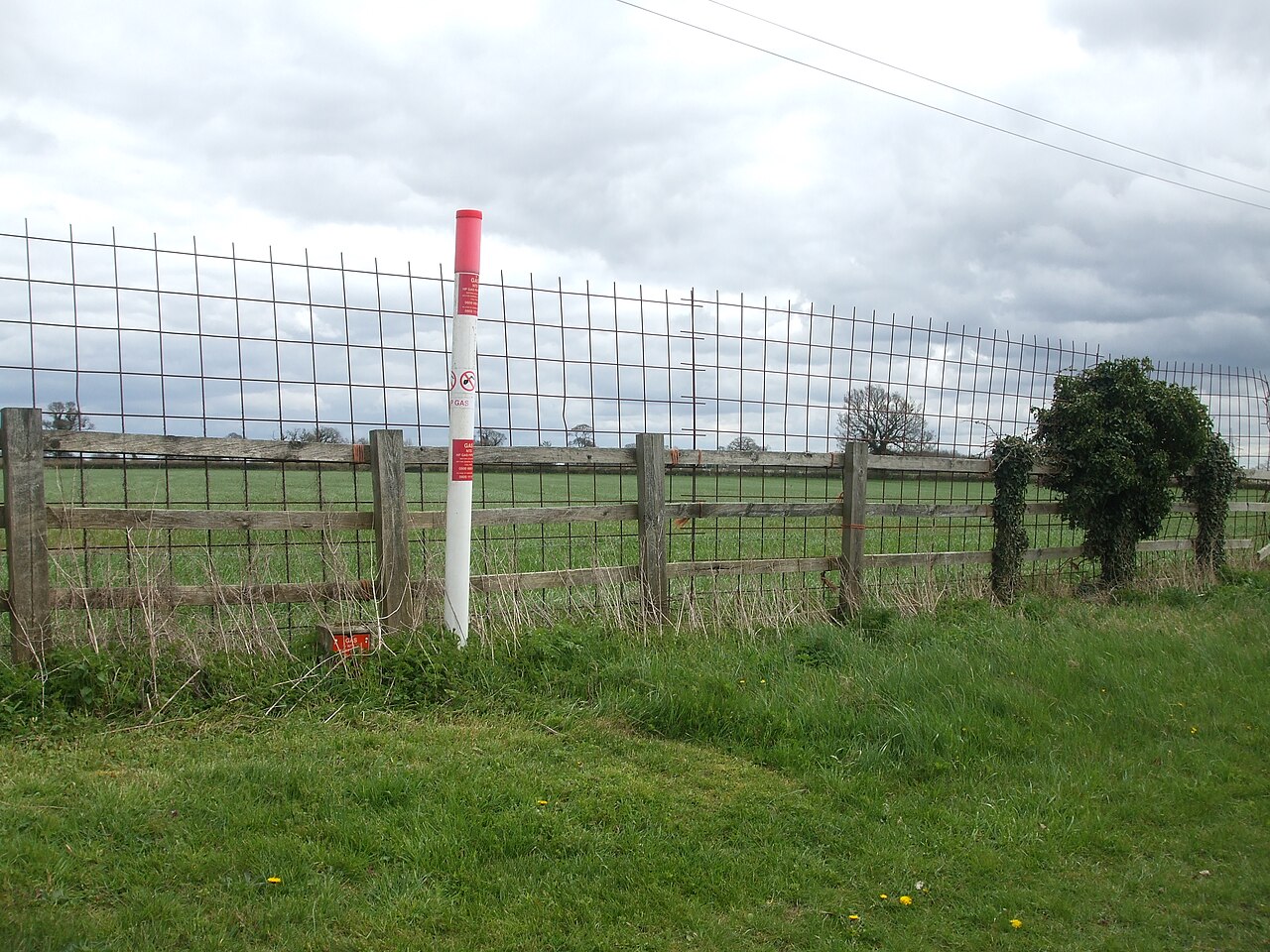
Photo: Neil Owen, CC BY-SA 2.0, via Wikimedia Commons.

Which standards should the clause cite?
Cite the product standard the declaration of performance refers to, the code of practice for installation, and the test method behind each value you set. A value without its test method cannot be checked against a submittal.
- BS 1722-14
- Fences. Specification for open mesh steel panel
Welded, expanded and woven mesh panel fences in four categories from general purpose to higher security, with loads, wind load calculation, post foundations, gate construction and steel and coating requirements. The 2017 edition replaced the 2006 one.
In the clause "Fence: Open mesh steel panel fence to BS 1722-14."
- BS 1722-12
- Fences. Steel palisade fences. Manufacturing and installation. Specification
Steel palisade fences, including pale profiles, rails, posts and installation.
In the clause Use for palisade only: "Fence: Steel palisade to BS 1722-12, W section pales."
- BS 1722-5
- Fences. Specification for close-boarded and wooden palisade fences
Close-boarded and timber palisade fences, including posts, arris rails, boards and gravel boards.
In the clause "Fence: Close-boarded fence to BS 1722-5, 1.8 m high, concrete posts."
- BS 1722-11
- Fences. Specification for prefabricated wood panel fences
Prefabricated timber panel fences of the kind used between private gardens.
In the clause "Fence: Prefabricated wood panel fence to BS 1722-11."
- BS 1722-16
- Fences. Specification for powder coatings used as a plastics finish to components and mesh
Organic powder coatings applied to fence components and mesh, including preparation and performance.
In the clause "Finish: Polyester powder coating to BS 1722-16, colour RAL 6005."
- BS EN ISO 1461
- Hot dip galvanized coatings on fabricated iron and steel articles. Specifications and test methods
Galvanizing of fabricated steel such as posts, rails and palisade pales after fabrication, including minimum coating thickness by steel thickness.
In the clause "Posts: Hot-dip galvanized after fabrication to BS EN ISO 1461."
- BS 8417
- Preservation of wood. Code of practice
Preservative treatment of timber by use class, including the ground contact class needed for timber fence posts.
In the clause "Timber posts: Preservative treated to BS 8417, Use Class 4."
- LPS 1175
- Requirements and testing procedures for the LPCB certification and listing of intruder resistant building components, strongpoints, security enclosures and free-standing barriers
The LPCB test and certification scheme for forced entry resistance of fences, gates and other components. Issue 8 rates products by threat level (A to H) and delay in minutes.
In the clause "Security rating: LPS 1175 Issue 8, rating as security adviser's report, LPCB certified."
Confirm the current edition of each standard at every issue. Avoice's State of UK Specifications 2026 found a withdrawn standard cited in 40% of specifications at contract issue.
How do you write it in CAWS?
Fencing is written in CAWS section Q40. Unlike the paving sections, Q40 is mostly written with one product clause per fence type: a mesh fence, a palisade fence and a close-boarded garden fence are three clauses in the 100s to 400s, each naming the system, posts, foundations and finish together. Gates are separate clauses in the 500s, because a gate has its own posts, hinges and locks even when it matches the fence.
The execution clauses in the 700s apply to every fence type: installation generally, competence of the installers, setting posts in concrete, making good galvanized surfaces and site painting. Completion clauses then cover cleaning, checking fixings and adjusting gates before handover. A mesh fence clause that says "setting posts as clause 720" relies on that clause being kept, so check it survives when the master is edited.
- Standard
- To BS 1722-14
- Manufacturer
- Submit proposals
- Product reference
- Submit proposals
- Height
- 2400 mm above finished ground level
- Mesh
- Welded twin wire, 8/6/8 mm, aperture 200 x 50 mm
- Posts
- Steel box section, size and spacing as design calculation
- Post foundations
- Concrete, depth and size as design calculation, as clause 720
- Design wind load
- To BS 1722-14 for site exposure, allowing for future screening
- Fixings
- Continuous clamp bars, anti-tamper bolts on the non-attack face
- Corrosion protection
- Hot-dip galvanized to BS EN ISO 1461
- Finish
- Polyester powder coating to BS 1722-16
- Colour
- TBC Colour subject to planning condition on boundary treatment. Resolve before ordering.
- Security rating
- None required
- Toppings
- None
- Accessories
- Matching corner, end and gate posts from the same system
Illustrative, not from a real project. One property is left as a TBC with a reason so it can be tracked and closed before issue.
Clauses the type clause relies on
- Q40/710
- Installation generally Setting out, line and level, and following ground slopes.
- Q40/715
- Competence Qualified fence installers, for example with an industry skills card.
- Q40/720
- Setting posts in concrete Hole size, concrete, plumbing posts and curing before panels are hung.
- Q40/780
- Making good galvanized surfaces Zinc-rich repair of cut ends and damage to galvanizing.
- Q40/920
- Fixings Checking and tightening all fixings before handover.
- Q40/930
- Gates Adjusting hinges, latches and closers before handover.
Clause numbers vary between NBS versions and practice masters. The 125 number follows the NBS Source listing for mesh panel fencing and the 700s and 900s follow published NBS landscape specifications; check each referenced clause exists in your Q40.
How do you write it in Uniclass?
In Uniclass the fence as built is a system, Ss_25_14_61_51 Metal mesh panel fencing systems, which holds the height, the post and foundation design, the security rating and the finished line. The panel itself is a product, Pr_25_71_50_19 Carbon steel welded mesh panels, and the posts are written as their own product where the practice wants that level of detail.
The split helps when one panel type is used in different fences. A 2.4 m perimeter fence and a 1.2 m fence around a bin store can share the same panel product clause while their systems carry different heights, posts and foundations. The gate is a separate system under Ss_25_32_35 Gate systems that sits in the fence line.
- Description
- Perimeter boundary fence, 2400 mm high
- Panels
- Pr_25_71_50_19 Carbon steel welded mesh panels (F01)
- Posts
- Steel box section, size and spacing as design calculation
- Foundations
- Concrete, as design calculation
- Design wind load
- To BS 1722-14 for site exposure
- Security rating
- None required
- Execution
- To BS 1722-14 and manufacturer's instructions
- Manufacturer
- Submit proposals
- Product reference
- Submit proposals
- Standard
- BS 1722-14
- Type
- Flat twin wire panel
- Wire diameter
- 8/6/8 mm
- Aperture
- 200 x 50 mm
- Panel height
- 2400 mm
- Corrosion protection
- Galvanized, then polyester powder coated to BS 1722-16
- Colour
- TBC Colour subject to planning condition on boundary treatment. Resolve before ordering.
- Fixings
- Continuous clamp bars, anti-tamper bolts
Illustrative. Performance of the finished system sits in the system clause; properties of the product sit in the product clause.
In NBS Chorus the product clause also carries the NBS reference 45-25-05/350 for carbon steel welded mesh panels. Use one classification throughout and do not mix CAWS and Uniclass references in one specification.
What goes in the spec, and what goes in the schedule?
The specification defines each type once. The schedule and drawings say where each type goes.
In the specification
What the product is and how it performs and is installed. Written once per type.
In the schedule or drawings
Where each type goes and how much of it. Changes with every plan revision.
Give each fence type a mark (F01, F02) and show the runs on the landscape or external works plan. Where the fence height steps with the ground, show it on an elevation, because a clause cannot describe it.
What are the common mistakes?
Most problems are a missing property, a property filled with the wrong kind of value, or a decision left silently open.
- "Security fence" with no rating. It cannot be priced or checked. State an LPS 1175 rating from the security adviser, or say none is required.
- Catalogue post sizes on an exposed site. Posts chosen for a sheltered garden lean or snap on a hilltop or coastal boundary. Ask for a wind load calculation to BS 1722-14.
- Screening added later. Privacy slats, netting or climbers on a mesh fence multiply the wind load. If they are planned, include them in the post design now.
- Powder coating with no pretreatment. Coating applied straight onto galvanizing can lose adhesion and flake. Cite BS 1722-16 and the pretreatment.
- Planning heights ignored. A 2 m fence along a highway frontage of a house usually needs planning permission. Check the permitted development limits before fixing the height.
- Gate weaker than the fence. A rated fence with an unrated gate is only as strong as the gate. Specify the gate to the same rating and from the same system.
How Avoice helps
Avoice drafts fence clauses from the external works drawings and boundary schedule already on the project, and flags what still needs a decision.
- Drafts from your drawings and schedules
It picks up fence marks such as F01 and F02 from the landscape plan, writes the Q40 product clause or the Uniclass system and product pair, and fills in type, height and finish where your information supports it.
- Leaves a TBC with a reason
If the colour is waiting on a planning condition or the security adviser has not given a rating, the clause says TBC with the reason, and the item joins the project TBC register to close before tender.
- Works from your own masters
Choose CAWS or Uniclass. Avoice adapts your practice's Q40 clauses rather than replacing them with generic text.
- Checks the clause against the drawings
QA/QC flags an F03 on the plan that the specification never defines, a fence clause that points to a deleted execution clause, or a withdrawn BS 1722 edition.
- Keeps product data linked
LPCB certificates, coating data and post calculations sit in the Product Room against the clause, so a substitute system can be checked against the rating and finish the clause asks for.
Related guides: How to specify gates, How to specify bollards, How to specify timber cladding.
Software can draft and check. The designer still chooses the product and is responsible for the specification.
Draft your fence clause in Avoice
Upload your drawings and schedules. Avoice drafts the clause in CAWS or Uniclass, cites the standards and flags anything your information does not settle.
This guide is for general education and is not professional advice. Check current editions of standards and Approved Documents, the manufacturer's data, and the requirements of your project before relying on any clause.