
How to specify natural stone paving
What a sandstone or other natural stone paving clause has to say, the decisions that come from the stone and the traffic, the standards to cite, and how to write it in CAWS and in Uniclass.
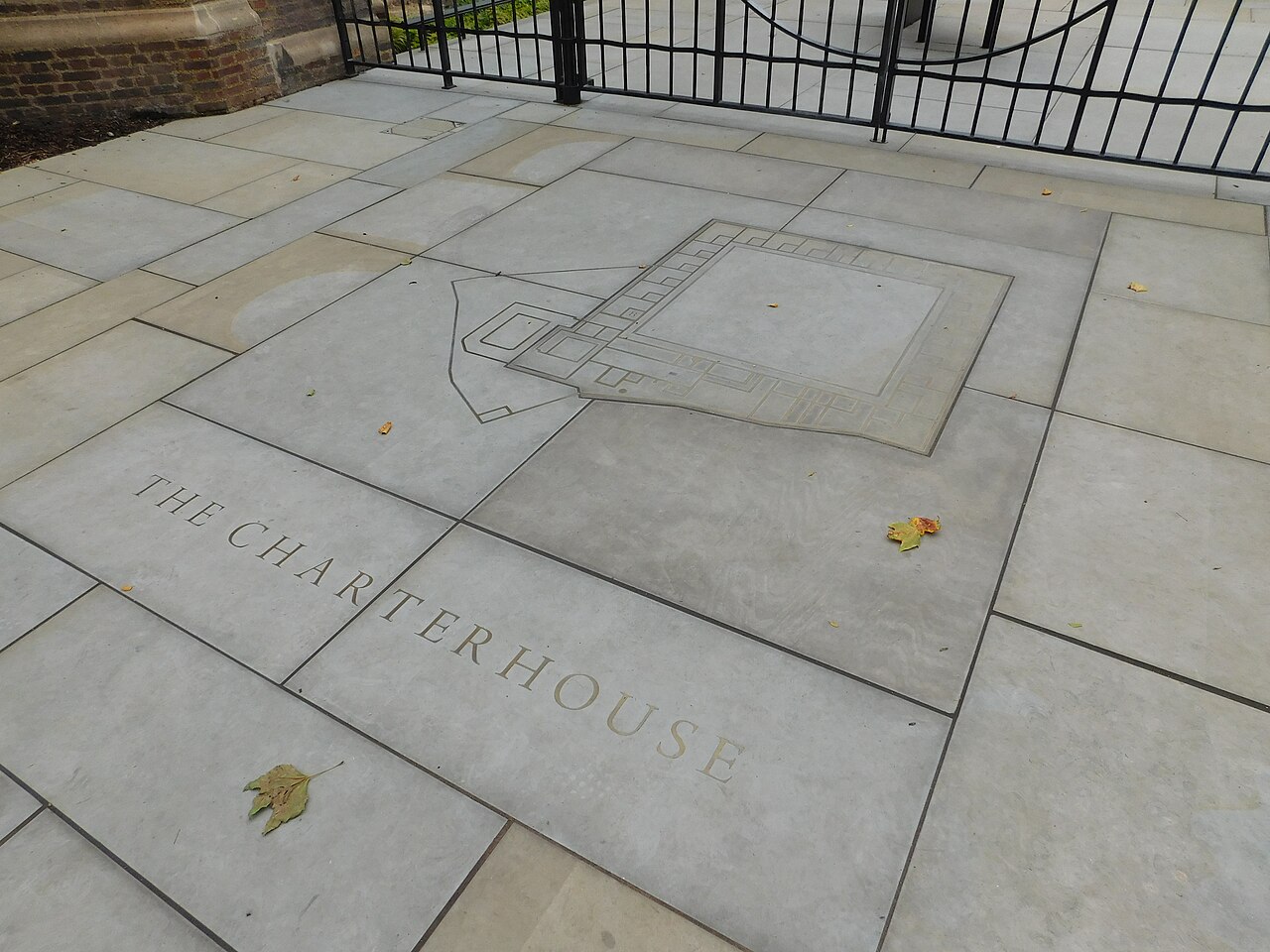
Photo: Paul Williams, CC BY-SA 2.0, via Wikimedia Commons.

How do you specify natural stone paving?
To specify natural stone paving, name the stone by its petrographic name and trade denomination, its source, finish and size, and cite BS EN 1341 for slabs. Take the thickness from the declared flexural strength and the traffic, not from a habit. State the wet slip resistance the location needs, frost resistance for external use, and the bedding and jointing method, and control appearance with approved samples.
Sandstone is the stone most UK paving clauses are written for, from riven Indian sandstone on a housing terrace to sawn Yorkstone in a city square. It is also the stone where a weak clause costs the most. Two slabs sold under the same name can differ in strength, water absorption and colour, so a clause that only says "sandstone, buff, riven" leaves the contractor to choose the stone as well as the price.
This guide covers Uniclass Pr_25_93_60_58 Natural stone paving slabs, which is the code for sawn or riven slabs laid as paving. The same principles apply to granite, limestone and slate slabs; what changes is the stone's declared values. Setts and flags have their own codes, Pr_25_93_60_57 Natural stone setts and Pr_25_93_60_53 Natural stone flags.
What does a natural stone paving slab clause need to cover?
Some properties are specific to natural stone paving. Others belong in every product clause. A clause that leaves either out gives the contractor room to substitute.
Properties of natural stone paving
- Product typeSlab, flag or sett; each has its own standard.
- Nominal sizeFixed sizes or random lengths; sets the layout.
- ThicknessNever guessCalculated from flexural strength and the load.
- TolerancesBS EN 1341 dimensional class; calibrated or not.
- Edge treatmentSawn, hand-dressed or tumbled edges.
- Slip resistanceDeclared wet value for the finish actually supplied.
- Wear resistanceAbrasion value for busy public areas.
- Freeze-thaw resistanceFrost resistance declared for external use.
- Structural performanceNever guessTraffic and pavement design; breaking load.
- Bedding and jointingBound or unbound, primer and joint mortar.
- Laying patternRandom, coursed or stack, related to falls.
- Coating systemImpregnating sealer or none; affects slip and colour.
- AccessibilityJoint widths, evenness and tactile at crossings.
What every product clause needs
- Manufacturer and product referenceSupplier, quarry and trade name, not just a colour.
- Product standardBS EN 1341 for slabs, evidenced by the DoP.
- Installation methodBS 7533-102 plus the supplier's laying guidance.
- Technical submittalsDoP with flexural strength, slip and frost values.
- Operation and maintenance informationCleaning products safe for the stone; spare slabs.
- MaterialPetrographic name and denomination, with source.
- FinishRiven, sawn, sandblasted, flamed or honed.
Uniclass Pr_25_93_60_58 Natural stone paving. Not every property applies to every project; where one does not, say so rather than leaving it blank.
Fields marked Never guess (thickness and structural performance) depend on the project and should never be filled from a default or a previous job. If the information is not available yet, the clause should say so with a TBC and a reason.
Which decisions does the clause depend on?
Most properties follow from the product you choose. These depend on the project, so they need a decision from the designer before the clause is written.
- 01
Thickness from strength, not habit
Never guessNatural stone varies in strength from quarry to quarry and bed to bed, so there is no safe default thickness. BS EN 1341 gives guidance in its informative Annex A, including a simplified method for calculating the thickness of a slab from its declared flexural strength, its plan size and the class of use. Riven patio sandstone sold at a nominal thickness has not been through that check, and its thickness varies across the slab. A large sawn slab in a trafficked square can need far more than the same stone on a garden terrace.
How to decide
- Ask the supplier for the declared flexural strength, tested to BS EN 12372, from the declaration of performance.
- Use BS EN 1341 Annex A, or ask the supplier to do the calculation for each slab size and use category.
- For riven stone, specify a calibrated thickness if it will be bedded thinly or laid on pedestals.
- Record the calculation in the submittals so a substitute stone can be checked the same way.
Write it asThickness: Calculated to BS EN 1341 Annex A for the declared flexural strength, slab size and use category. Submit calculation. - 02
Traffic and the pavement below
Never guessStone slabs are brittle. Under vehicle loads a slab that is too thin for its plan size cracks across the middle, and a slab on an unbound bed rocks and breaks at the corners. Where vehicles of any kind can reach the paving, including delivery vans mounting a footway, the pavement has to be designed as a whole, usually on a bound concrete base with a mortar bed. BS 7533-101 sets out the structural design approach for modular pavements, and that design belongs with the engineer.
How to decide
- Establish whether any vehicle can reach the area, including overrun, deliveries and maintenance plant.
- Pedestrian only: state it in the clause so the limit is on record.
- Any vehicles: engineer to design the pavement layers, and the slab thickness must be checked for that load.
- Smaller plan sizes carry load better than large slabs at the same thickness; consider them in trafficked areas.
Write it asStructural performance: Pedestrian traffic and occasional light vehicle overrun. Pavement design by engineer to BS 7533-101. - 03
Naming the stone
Stone"Sandstone" covers stones with very different strength, porosity and colour stability. BS EN 1341 expects the stone to be identified by its petrographic name to BS EN 12407, its traditional or trade name (denomination, to BS EN 12440), and its place of origin. Imported sandstones are often sold under trade names that change between suppliers, so the same name can mean a different quarry. Naming the source, and approving reference samples, is what stops a cheaper stone with the same name being delivered.
How to decide
- State the petrographic name, denomination and country and region of origin.
- Ask for the declaration of performance and test values for the named source, not a generic data sheet.
- Agree reference samples showing the range of colour and markings, and keep them on site.
- Ask for evidence of responsible sourcing for imported stone if the client has a procurement policy.
Write it asStone: Sandstone to BS EN 12407; denomination and origin as approved reference sample. Submit declaration of performance for the named source. - 04
Finish and slip resistance
SlipFinish decides how the stone looks and how it behaves when wet. Riven sandstone has a natural texture but an uneven surface. Sawn slabs are flat and can be left sawn, sandblasted, bush-hammered or flamed, which changes the wet slip value considerably. A honed finish that looks right in a sample room can be slippery outside. BS EN 1341 asks for a declared slip resistance value measured with the pendulum to BS EN 14231, so ask for the value for the finish that will be supplied, not the range in general.
How to decide
- Decide the finish with the slip requirement, not after it.
- Set a minimum wet pendulum value, in line with UK Slip Resistance Group guidance that a wet value of 36 or more is low slip potential.
- Ask for test results for the exact finish, and consider site testing of the laid paving.
- Avoid honed or polished finishes on external routes.
Write it asSlip resistance: Wet slip resistance value declared to BS EN 14231 for the finish supplied, not less than 36. - 05
Bound or unbound construction
LayingStone slabs can be laid unbound on a sand or grit laying course with granular joints, or bound on a mortar bed over a concrete base with mortar joints. Unbound laying is cheaper and drains through the joints, but slabs move and joints wash out in trafficked areas. Bound laying suits public realm and anything that may see vehicles, and it needs a bond bridge or primer on the underside of each slab. Denser stones and sawn slabs with smooth undersides depend on the primer more than riven stone does.
How to decide
- Pedestrian garden terraces: unbound may be acceptable; follow the supplier's guidance.
- Public realm or any vehicle risk: bound construction on a concrete base, designed by the engineer.
- Bound: specify a primer or bond bridge to the underside of each slab and a jointing mortar to BS 7533-102.
- Choose jointing mortars that will not stain porous sandstone; ask the supplier which they approve.
Write it asLaying course: Bound mortar bed on concrete base, primer applied to underside of each slab. Jointing: Mortar to BS 7533-102, colour as approved sample.
The values under "Write it as" are examples. The right value depends on the location, the use and the fire strategy.
Which standards should the clause cite?
Cite the product standard the declaration of performance refers to, the code of practice for installation, and the test method behind each value you set. A value without its test method cannot be checked against a submittal.
- BS EN 1341
- Slabs of natural stone for external paving. Requirements and test methods
The product standard for natural stone paving slabs, including dimensional tolerances, the characteristics a declaration of performance covers, and informative Annex A on thickness for different classes of use.
In the clause "Paving slabs: To BS EN 1341, thickness calculated to Annex A."
- BS EN 12372
- Natural stone test methods. Determination of flexural strength under concentrated load
The flexural strength test that BS EN 1341 calls for. Its declared value feeds the Annex A thickness guidance. Do not confuse it with BS EN 13161, the constant moment test.
In the clause "Flexural strength: Declared value to BS EN 12372; submit test report."
- BS EN 14231
- Natural stone test methods. Determination of the slip resistance by means of the pendulum tester
The pendulum test used to declare the slip resistance value of natural stone, for the surface finish tested.
In the clause "Slip resistance: Wet value to BS EN 14231, not less than 36."
- BS EN 12371
- Natural stone test methods. Determination of frost resistance
The freeze-thaw test behind the declared frost resistance of external stone.
In the clause "Frost resistance: Declared to BS EN 12371 for external use."
- BS EN 12407 and BS EN 12440
- Natural stone test methods. Petrographic examination; Natural stone. Denomination criteria
How a stone is identified: its petrographic name, and the rules for its traditional name and origin.
In the clause "Stone: Petrographic name to BS EN 12407, denomination to BS EN 12440."
- BS 7533-101
- Pavements constructed with clay, concrete or natural stone paving units. Code of practice for the structural design of pavements using modular paving units
Structural design of modular pavements, including natural stone, from the traffic category.
In the clause "Pavement design: By engineer to BS 7533-101."
- BS 7533-102
- Pavements constructed with clay, concrete or natural stone paving units. Installation of pavements using modular paving units. Code of practice
Installation of bound and unbound modular pavements including natural stone slabs and setts, from sub-base to surface.
In the clause "Laying and jointing: To BS 7533-102."
- BS EN 1342
- Setts of natural stone for external paving. Requirements and test methods
The product standard for natural stone setts, which often appear in the same scheme as slabs.
In the clause Use it for setts only: "Setts: To BS EN 1342".
Confirm the current edition of each standard at every issue. Avoice's State of UK Specifications 2026 found a withdrawn standard cited in 40% of specifications at contract issue.
For the regulations behind these choices, see Approved Document M explained, or search the Avoice Regulations library.
How do you write it in CAWS?
Natural stone slab paving is written in CAWS section Q25. Recent NBS-format landscape specifications open with paving system clauses in the 100s, one for each build-up, setting out the sub-base, base, laying course, primer, paving units and jointing. The stone itself is often written as a separate product clause in the 300s, for example 310 Natural stone slabs, so that a sawn slab used on a bound terrace and on a pedestal roof terrace is described once.
The execution clauses that follow apply to every type: samples, adverse weather, laying generally, levels, regularity, protection and, where required, slip resistance testing. The sub-base is written in Q20 and kerbs and edgings in Q10. Delete any Q20 reference that does not apply, because a granular sub-base line left in a bound terrace clause will be priced.
- Description
- Public courtyard, pedestrian with occasional service vehicle overrun
- Granular sub-base
- As section Q20, thickness as engineer's design
- Base
- Concrete, as engineer's design
- Laying course
- Bound mortar bed
- Laying course accessories
- Primer to underside of each slab, as clause 435
- Paving units
- Natural stone slabs, as clause 310
- Stone
- Sandstone, denomination and origin as approved reference sample
- Finish
- Sawn and sandblasted
- Size
- 600 mm wide, random lengths 600 to 900 mm
- Thickness
- Calculated to BS EN 1341 Annex A, submit calculation
- Colour range
- TBC Reference samples from two shortlisted quarries awaiting client approval. Resolve before ordering.
- Slip resistance
- Wet value to BS EN 14231 not less than 36, finish as supplied
- Frost resistance
- Declared to BS EN 12371, suitable for external use
- Jointing
- Mortar to BS 7533-102, 6 mm joints
- Bond
- Coursed random lengths, as paving layout drawing
- Surface treatment
- None
Illustrative, not from a real project. One property is left as a TBC with a reason so it can be tracked and closed before issue.
Clauses the type clause relies on
- Q25/610
- Material samples Reference samples showing the full range of colour and markings, approved before orders are placed.
- Q25/620
- Adverse weather Temperature limits for mortar-bedded work and protection from frost, drying and saturation.
- Q25/625
- Laying pavings - general Firm bedding with no rocking, falls to prevent ponding, clean cutting without spalling.
- Q25/635
- Regularity of paved surfaces Permitted gap under a straightedge and level difference between adjacent slabs.
- Q25/645
- Protection Keeping traffic off mortar-bedded paving while it cures, and keeping the stone free of stains.
- Q25/930
- Slip resistance testing Site pendulum testing of the laid paving, wet and dry, by an accredited laboratory.
Clause numbers vary between NBS versions and practice masters; these follow a recent NBS-format landscape specification, so check each referenced clause exists in your Q25.
How do you write it in Uniclass?
Uniclass separates the construction from the stone. Ss_30_14_90_30 Flag and slab bound paving systems covers slabs on a mortar bed over a bound base, and Ss_30_14_90_36 Flag and slab unbound paving systems covers slabs on a sand or grit laying course. The system clause holds the layers, primer, jointing and the performance of the finished pavement.
The stone is written once as a Pr_25_93_60_58 product clause, with its petrographic name, denomination, finish, size and declared values. That suits stone schemes well, because the same stone usually runs from a bound public area onto unbound garden paths, and a change of quarry or finish only has to be made in one place.
- Description
- Public courtyard, pedestrian with occasional service vehicle overrun
- Base
- Concrete, as engineer's design
- Laying course
- Bound mortar bed, primer to underside of each slab
- Paving units
- Pr_25_93_60_58 Natural stone paving slabs (SP01)
- Jointing
- Mortar to BS 7533-102, 6 mm joints
- Bond
- Coursed random lengths, as paving layout drawing
- Structural performance
- As engineer's design to BS 7533-101
- Slip resistance of finished surface
- Wet value not less than 36, site tested
- Supplier
- Submit proposals
- Product standard
- BS EN 1341
- Stone
- Sandstone to BS EN 12407, denomination and origin as approved reference sample
- Finish
- Sawn and sandblasted
- Nominal size
- 600 mm wide, random lengths 600 to 900 mm
- Thickness
- Calculated to BS EN 1341 Annex A
- Colour range
- TBC Reference samples from two shortlisted quarries awaiting client approval. Resolve before ordering.
- Flexural strength
- Declared value to BS EN 12372
- Slip resistance
- Wet value to BS EN 14231 not less than 36
- Frost resistance
- Declared to BS EN 12371
Illustrative. Performance of the finished system sits in the system clause; properties of the product sit in the product clause.
In NBS Chorus the product clause also carries an NBS reference (for natural stone slabs, 45-20-64/325). Use one classification for the whole specification and do not mix CAWS and Uniclass references.
What goes in the spec, and what goes in the schedule?
The specification defines each type once. The schedule and drawings say where each type goes.
In the specification
What the product is and how it performs and is installed. Written once per type.
In the schedule or drawings
Where each type goes and how much of it. Changes with every plan revision.
Give each stone paving type a mark (SP01, SP02) and let the landscape layout show where it goes. Steps, kerbs and copings in the same stone are separate products with their own standards, so schedule them rather than adding them to the paving area.
What are the common mistakes?
Most problems are a missing property, a property filled with the wrong kind of value, or a decision left silently open.
- Colour and finish only. "Buff riven sandstone" can describe stones from many quarries with different strength and porosity. Name the stone, its origin and the approved sample.
- A thickness nobody calculated. Slabs cracked across the middle are usually too thin for their size and load. Use the BS EN 1341 Annex A calculation.
- A slip value for the wrong finish. A sandblasted test result does not cover a honed slab of the same stone. Ask for the value for the finish supplied.
- Cement-rich mortar staining the stone. Some jointing mortars mark porous sandstone. Use a mortar the supplier approves and protect the face during jointing.
- No reference panel. Natural colour variation causes disputes after laying. Agree reference samples and a panel before the main area is laid.
- A sealer added late. Impregnating sealers can darken stone and change wet slip values. Decide on sealing before the slip test, or say none.
How Avoice helps
Avoice drafts natural stone paving clauses from the landscape drawings and the supplier information on the project, and shows clearly what still needs deciding.
- Drafts from your drawings and schedules
It reads the paving types such as SP01 and SP02 from the landscape layout, writes the Q25 system and 310 product clauses or the Uniclass pair, and fills in the stone, finish and bedding it can support.
- Leaves a TBC with a reason
If the client has not chosen between two quarries, or the thickness calculation has not come back, the clause says TBC with the reason and it goes into the project TBC register to close before tender.
- Works from your own masters
Choose CAWS or Uniclass. Avoice adapts your practice's Q25 clauses rather than replacing them with generic text.
- Checks the clause against the drawings
QA/QC flags a slab clause citing BS EN 1342 for setts, a Q20 reference left in a bound terrace, or a stone named differently on the drawing and in the specification.
- Keeps product data linked
The supplier's declaration of performance and test reports sit in the Product Room against the product clause, so a substitute stone can be checked against the declared values the clause asks for.
Related guides: How to specify porcelain paving, How to specify block paving, How to specify natural stone tiles.
Software can draft and check. The designer still chooses the product and is responsible for the specification.
Draft your natural stone paving slab clause in Avoice
Upload your drawings and schedules. Avoice drafts the clause in CAWS or Uniclass, cites the standards and flags anything your information does not settle.
This guide is for general education and is not professional advice. Check current editions of standards and Approved Documents, the manufacturer's data, and the requirements of your project before relying on any clause.