
How to specify cycle stands
What a cycle stand clause has to say, from stand type and spacing to larger cycles, fixing and visibility, the guidance to follow, and how to write it in CAWS and in Uniclass.
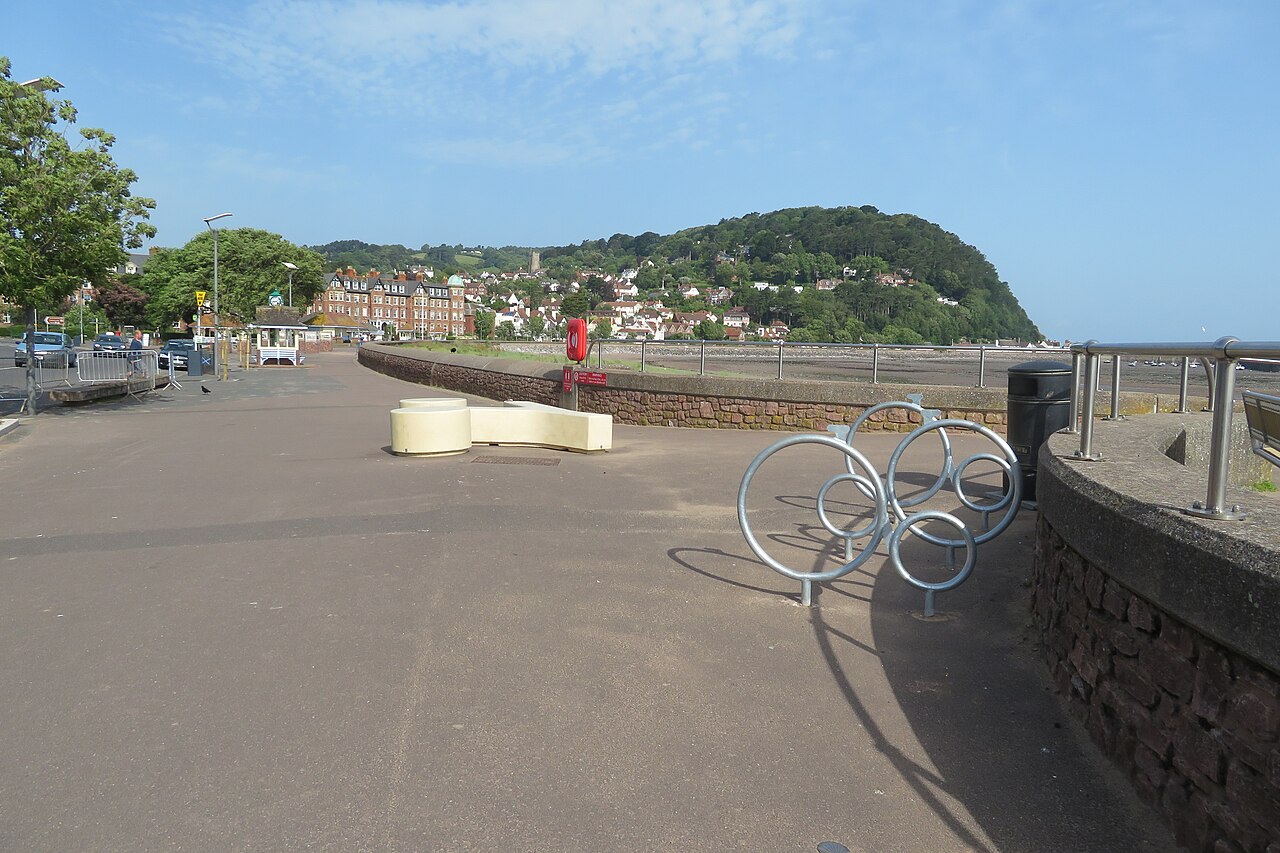
Photo: John C, CC BY-SA 2.0, via Wikimedia Commons.

How do you specify cycle stands?
To specify cycle stands, take the number of spaces from the local plan standard, then choose the stand type, usually a Sheffield stand that holds two cycles. Lay them out to the spacing and aisle widths in the London Cycling Design Standards or LTN 1/20, with a share of spaces for larger and adapted cycles. Specify the stand size, tube, material and finish, the fixing method, contrast bands and a tapping rail on end stands.
Cycle parking is often counted correctly on the planning drawings and then built badly: stands too close together to use both sides, two-tier racks that nobody can lift a bike onto, no room for a cargo bike or a hand-cycle, and stands that are hard to see for people with impaired sight. The number of spaces is usually fixed by a planning condition. The clause and the layout decide whether those spaces actually work.
This guide uses Uniclass Pr_40_30_21_12 Carbon steel cycle stands, the code NBS Source uses for galvanized Sheffield stands. Stainless steel stands are Pr_40_30_21_84 Stainless steel cycle stands, and wall-mounted racks and lockers have their own codes in the same group.
What does a cycle stand clause need to cover?
Some properties are specific to cycle stands. Others belong in every product clause. A clause that leaves either out gives the contractor room to substitute.
Properties of cycle stands
- Anchorage methodRoot-fixed in concrete or bolted base plate.
- MaterialGalvanized carbon steel or stainless steel tube.
- Security ratingFor lockers and stores, from the security strategy.
- AccessoriesTapping rails, contrast bands, signs, shelters.
- Corrosion protectionHot-dip galvanized to BS EN ISO 1461.
- FinishGalvanized, powder coated or brushed stainless.
- Product typeSheffield stand, two-tier rack, wall rack or locker.
What every product clause needs
- Manufacturer and product referenceNamed stand, or a description of a Sheffield stand.
- Product standardNo product standard; cite design guidance and steel standards.
- Installation methodManufacturer's fixing detail and the layout drawing.
- Technical submittalsDimensioned drawing, fixing detail and coating data.
- Operation and maintenance informationCoating repair, fixing checks and replacement parts.
- FixingsAnti-tamper fixings for surface-mounted stands.
Uniclass Pr_40_30_21_12 Cycle stands. Not every property applies to every project; where one does not, say so rather than leaving it blank.
Which decisions does the clause depend on?
Most properties follow from the product you choose. These depend on the project, so they need a decision from the designer before the clause is written.
- 01
Sheffield stands, racks and larger cycles
Stand typeThe Sheffield stand, a bent steel tube fixed into the ground, is the default because it supports the frame, lets both wheels and the frame be locked, and works for most cycles. Two-tier racks fit more cycles into a store but need wide aisles and some strength to use, and are hard for older people and anyone with a heavy bike. Wheel-only racks hold the front wheel and damage it. Planning policy in London requires cycle parking to cater for larger and adapted cycles, and the London Cycling Design Standards recommend that at least 5% of spaces can take a larger cycle.
How to decide
- Short-stay visitor parking: Sheffield stands near the entrance.
- Long-stay residents' and staff parking: Sheffield stands in a secure covered store; two-tier racks only for part of the provision, with an accessible alternative.
- Provide wider spaced stands at the ends of rows, with level access, for cargo bikes, tricycles and adapted cycles.
- Avoid wheel-only racks and butterfly stands.
Write it asType: Sheffield stand, holding two cycles. Larger cycle spaces: end stands at increased spacing as layout drawing, not less than 5% of spaces. - 02
Spacing, aisles and clearances
LayoutA row of Sheffield stands at the wrong spacing loses half its capacity, because cyclists cannot reach both sides. LCDS chapter 8 recommends 1.2 m between stands, with 1.0 m as a minimum, and an aisle beside the row that is wider where larger cycles have to use it. It also asks for at least 450 mm between a parked cycle and the kerb edge of a carriageway or cycle track, and 600 mm between a stand and other objects higher than the kerb. As a quick check, LCDS suggests allowing at least 1.4 m² per space for Sheffield stands holding two cycles each.
How to decide
- Take the number of spaces from the planning condition or local plan standard, such as Table 10.2 of the London Plan.
- Draw the layout to LCDS or LTN 1/20 spacing, including aisles and clearances, before fixing store sizes.
- Check door widths, ramps and routes to the store for larger cycles, not just the stands.
- Outside London, check the local authority's own cycle parking guidance, which may differ.
Write it asLayout: Stands at 1200 mm centres, aisle and clearances to LCDS chapter 8, as cycle parking layout drawing. - 03
Root-fixed or base plate
FixingRoot-fixed stands are cast into concrete pockets below the paving and are the most secure, since there are no bolts to undo. Base-plated stands bolt onto an existing slab or paving, which is quicker and avoids digging, but the bolts need anti-tamper heads and the slab has to be thick enough for the anchors. On podiums, roof terraces and over basements, drilling for anchors goes through the waterproofing unless the stand sits on a plinth or a ballasted frame. Services under footways also move root-fixed stands on site.
How to decide
- New paving on the ground: root-fixed in concrete.
- Existing slabs or paving that cannot be dug: base-plated with anti-tamper anchors, slab checked.
- Over waterproofing: avoid penetrations; use a plinth or frame and coordinate with the roofing specification.
- Check the layout against the utility survey before tender.
Write it asFixing: Root-fixed in concrete, embedment to manufacturer's detail, as clause 515. - 04
Finish, contrast and tapping rails
VisibilityStands on footways and in public spaces are obstacles for blind and partially sighted people. LCDS asks for stands with strong visual contrast with their surroundings, recommends visibility bands in a contrasting colour, and recommends a tapping rail on the end stand of a row so a cane user can find it. For durability, galvanized carbon steel is the usual choice, either left plain or powder coated; stainless steel needs no coating but costs more and can show tea staining in coastal or polluted air if the grade is low.
How to decide
- Choose a stand colour that contrasts with the paving, or add contrasting bands near the top.
- Add a tapping rail to the end stand of each row on pedestrian routes.
- On or beside the highway, check the highway authority's preferred finish and pattern.
- Specify galvanizing to BS EN ISO 1461 for carbon steel stands, with or without powder coating.
Write it asFinish: Hot-dip galvanized to BS EN ISO 1461, polyester powder coated black, with two contrasting visibility bands. Tapping rail to end stands. - 05
Shelter and security for long-stay parking
SecurityResidents and staff leave cycles for long periods, often overnight, and will not use parking that is uncovered or easy to steal from. Long-stay parking is normally in a secure, covered store or compound with access control, and the stands inside it are the same Sheffield stands, laid out with the same spacing. Lockers are an alternative where space is tight or for visitors' kit. Where a store or locker needs a tested security rating, it comes from the project's security strategy, not from the stand clause.
How to decide
- Long-stay: covered, lit, access-controlled store close to the entrance, with Sheffield stands inside.
- Short-stay: stands in view of entrances and natural surveillance, not hidden round corners.
- If the security strategy asks for rated stores or lockers, take the rating from it.
- Coordinate lighting, access control and CCTV with the electrical and security packages.
Write it asLong-stay store: Covered and access-controlled as architectural drawings; stands as clause 210. Security rating: As security strategy, none required for stands.
The values under "Write it as" are examples. The right value depends on the location, the use and the fire strategy.
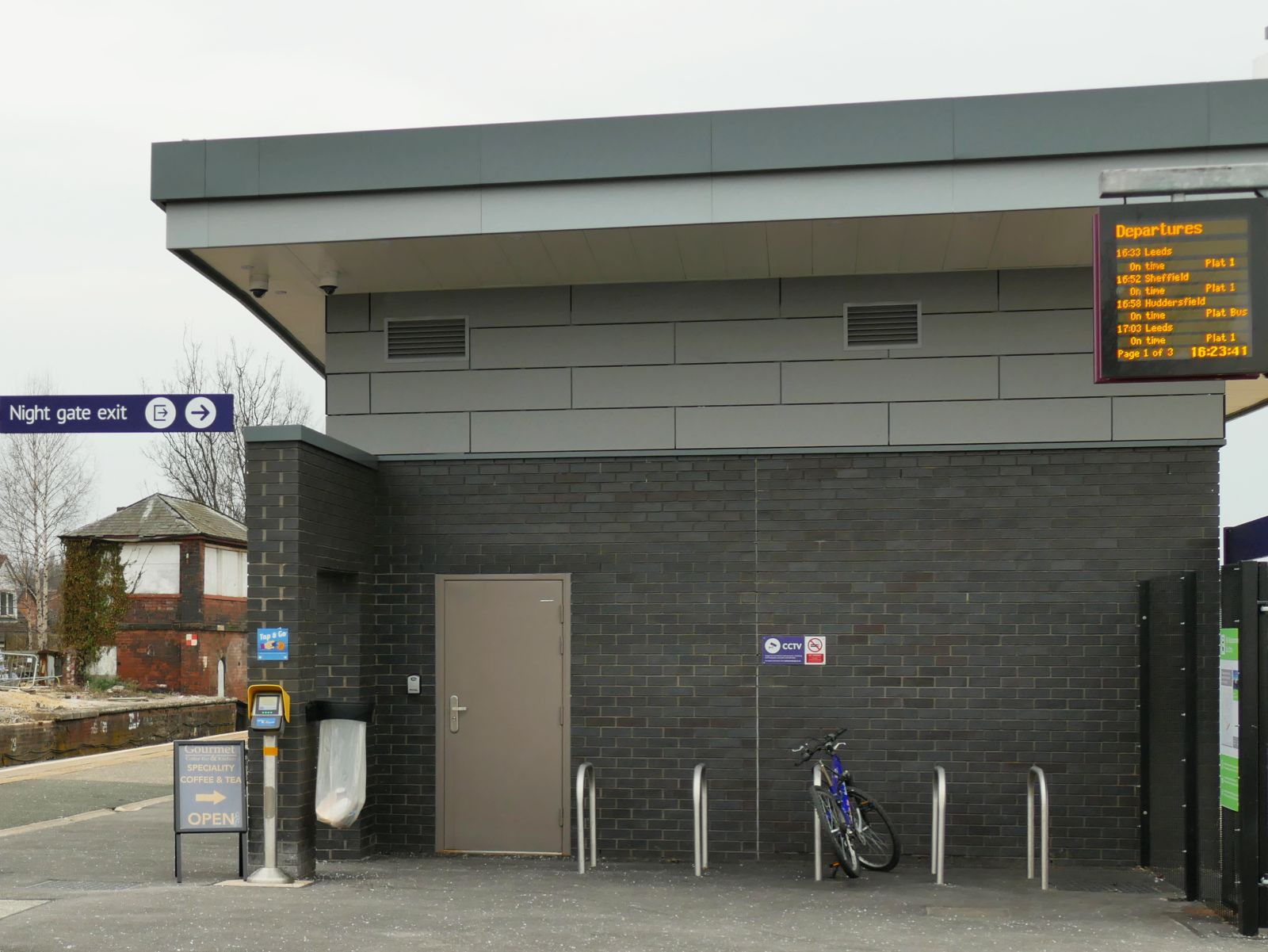
Photo: Stephen Craven, CC BY-SA 2.0, via Wikimedia Commons.

Which standards should the clause cite?
Cite the product standard the declaration of performance refers to, the code of practice for installation, and the test method behind each value you set. A value without its test method cannot be checked against a submittal.
- London Cycling Design Standards, chapter 8
- Cycle parking (Transport for London)
Detailed guidance on cycle parking types, Sheffield stand design, spacing, aisle widths, clearances, larger cycles, contrast and tapping rails. The London Plan requires cycle parking to be designed to it.
In the clause "Layout and stand design: To LCDS chapter 8."
- LTN 1/20
- Cycle infrastructure design (Department for Transport)
National guidance on cycle infrastructure in England, including a chapter on cycle parking with stand types and clearances.
In the clause Outside London: "Layout: To LTN 1/20 and local authority cycle parking guidance."
- London Plan 2021, Policy T5
- Cycling
Minimum cycle parking standards by use in Table 10.2, design to LCDS, and provision for larger and adapted cycles.
In the clause "Number of spaces: As Policy T5 and Table 10.2 of the London Plan, and planning condition."
- BS 8300-1
- Design of an accessible and inclusive built environment. External environment. Code of practice
Accessible external environments, including keeping routes clear of obstacles and making street furniture visible.
In the clause "Position and contrast: Clear of accessible routes, to BS 8300-1."
- BS EN ISO 1461
- Hot dip galvanized coatings on fabricated iron and steel articles. Specifications and test methods
Galvanizing of fabricated carbon steel stands after bending and welding.
In the clause "Stands: Hot-dip galvanized after fabrication to BS EN ISO 1461."
- BS EN 10219-1
- Cold formed welded structural hollow sections of non-alloy and fine grain steels. Technical delivery conditions
Steel hollow sections of the kind used for stand tubes, where the manufacturer declares the tube to it.
In the clause "Tube: Steel hollow section to BS EN 10219-1, size as manufacturer's standard."
Confirm the current edition of each standard at every issue. Avoice's State of UK Specifications 2026 found a withdrawn standard cited in 40% of specifications at contract issue.
How do you write it in CAWS?
Cycle stands are written in CAWS section Q50 as a product clause, alongside seats, bins and bollards. One clause per stand type is usual: a short-stay Sheffield stand outside and the same stand inside a store can share a clause, while a two-tier rack or wall rack needs its own. The clause names the stand, its size, tube, finish, fixing and accessories, and points to the layout drawing for numbers and positions.
The general clauses later in Q50 cover concrete foundations, setting components in concrete, repairing galvanizing and site painting, and apply to root-fixed stands. Shelters and compounds are separate products, often in Q50 or in the structural or envelope sections, and should be cross-referenced so the stands and their enclosure are priced together.
- Type
- Sheffield stand, holding two cycles
- Manufacturer
- Submit proposals
- Product reference
- Submit proposals
- Material
- Carbon steel tube
- Height above ground
- 750 mm
- Length
- 800 mm
- Corrosion protection
- Hot-dip galvanized to BS EN ISO 1461
- Finish
- Polyester powder coated black, two contrasting visibility bands
- Fixing
- Root-fixed in concrete, as clause 515
- Spacing
- 1200 mm centres, aisles to LCDS chapter 8
- Number of stands
- TBC Cycle parking numbers subject to discharge of planning condition. Resolve before tender.
- Larger cycle spaces
- End stands at increased spacing, not less than 5% of spaces
- Accessories
- Tapping rail to end stand of each row
Illustrative, not from a real project. One property is left as a TBC with a reason so it can be tracked and closed before issue.
Clauses the type clause relies on
- Q50/510
- Concrete foundations generally Concrete and excavation for root-fixed stands.
- Q50/515
- Setting components in concrete Setting stands plumb and at the right height while concrete cures.
- Q50/550
- Damage to galvanized surfaces Repair of galvanizing damaged in handling or fixing.
- Q50/560
- Site painting Touching up powder coating after installation.
Clause numbers vary between NBS versions and practice masters. The 210 number follows NBS Source listings for cycle stands and the 500s follow a published NBS landscape specification; check each referenced clause exists in your Q50.
How do you write it in Uniclass?
In Uniclass the cycle parking as a whole is a system, Ss_40_85_72_20 Cycle parking equipment systems. The system clause holds the number of spaces, the layout and spacing, the share for larger cycles, the fixing and the relationship to any shelter or store.
The stand itself is a product clause, Pr_40_30_21_12 Carbon steel cycle stands, with its size, tube, finish and accessories. Short-stay stands outside and long-stay stands in a store are two systems, with different numbers and enclosures, pointing to the same product clause. The older code Ss_40_20_30_20 for cycle parking equipment systems is no longer in use, so update masters that still carry it.
- Description
- Short-stay visitor cycle parking at main entrance
- Stands
- Pr_40_30_21_12 Carbon steel cycle stands (CS01)
- Number of spaces
- As planning condition and cycle parking layout drawing
- Layout
- 1200 mm centres, aisles and clearances to LCDS chapter 8
- Larger cycles
- Not less than 5% of spaces
- Fixing
- Root-fixed in concrete
- Manufacturer
- Submit proposals
- Product reference
- Submit proposals
- Type
- Sheffield stand
- Size
- 750 mm high above ground, 800 mm long
- Tube
- Steel hollow section, diameter and wall as manufacturer's standard
- Corrosion protection
- Hot-dip galvanized to BS EN ISO 1461
- Finish
- Polyester powder coated black, two contrasting visibility bands
- Quantity
- TBC Cycle parking numbers subject to discharge of planning condition. Resolve before tender.
- Accessories
- Tapping rail variant for end stands
Illustrative. Performance of the finished system sits in the system clause; properties of the product sit in the product clause.
In NBS Chorus the product clause also carries the NBS reference 45-35-86/301 for carbon steel cycle stands. Use one classification throughout and do not mix CAWS and Uniclass references in one specification.
What goes in the spec, and what goes in the schedule?
The specification defines each type once. The schedule and drawings say where each type goes.
In the specification
What the product is and how it performs and is installed. Written once per type.
In the schedule or drawings
Where each type goes and how much of it. Changes with every plan revision.
Give each stand type a mark (CS01, CS02) and show every stand on a dimensioned cycle parking layout, because spacing is where most schemes fail. Keep the space count on the drawing, tied to the planning condition, so the clause does not carry a number that changes.
What are the common mistakes?
Most problems are a missing property, a property filled with the wrong kind of value, or a decision left silently open.
- Stands too close together. At less than the minimum spacing only one side of each stand can be used. Lay out to LCDS or LTN 1/20 spacing.
- All two-tier racks. Upper tiers are hard to use with a heavy or adapted cycle. Provide Sheffield stands for at least part of the long-stay parking.
- No room for larger cycles. Cargo bikes, tricycles and hand-cycles need wider spaces and level routes. Plan at least 5% of spaces for them.
- No contrast or tapping rail. Stands in footways are a collision hazard for people with impaired sight. Add contrasting bands and a tapping rail on end stands.
- Base plates drilled through waterproofing. Anchors on a podium or roof terrace puncture the membrane. Use a plinth or frame and coordinate with the roofing specification.
- Space count in the clause. Numbers change through planning. Keep them on the layout drawing tied to the condition, and reference it.
How Avoice helps
Avoice drafts cycle stand clauses from the cycle parking layout and planning information on the project, and checks the layout against the clause.
- Drafts from your drawings and schedules
It reads CS01 and CS02 positions and counts from the cycle parking layout, writes the Q50 clause or the Uniclass system and product pair, and fills in the stand type, finish and fixing.
- Leaves a TBC with a reason
If the number of spaces is waiting on discharge of a planning condition, the clause says TBC with the reason, and the item joins the project TBC register to close before tender.
- Works from your own masters
Choose CAWS or Uniclass. Avoice adapts your practice's Q50 clauses rather than replacing them with generic text.
- Checks the clause against the drawings
QA/QC flags stand counts on the drawings that do not match the schedule, a CS03 with no clause, or a master still using a Uniclass code that is no longer in use.
- Keeps product data linked
Stand drawings and coating data sit in the Product Room against the clause, and a linked product edited once updates every clause that uses it, so the short-stay and long-stay stands stay the same.
Related guides: How to specify bollards, How to specify tactile paving, How to specify block paving.
Software can draft and check. The designer still chooses the product and is responsible for the specification.
Draft your cycle stand clause in Avoice
Upload your drawings and schedules. Avoice drafts the clause in CAWS or Uniclass, cites the standards and flags anything your information does not settle.
This guide is for general education and is not professional advice. Check current editions of standards and Approved Documents, the manufacturer's data, and the requirements of your project before relying on any clause.