
How to specify fire-rated glass
What a fire-resistant glass clause has to say about integrity, insulation and the tested system around the glass, and how to write it in CAWS and in Uniclass.
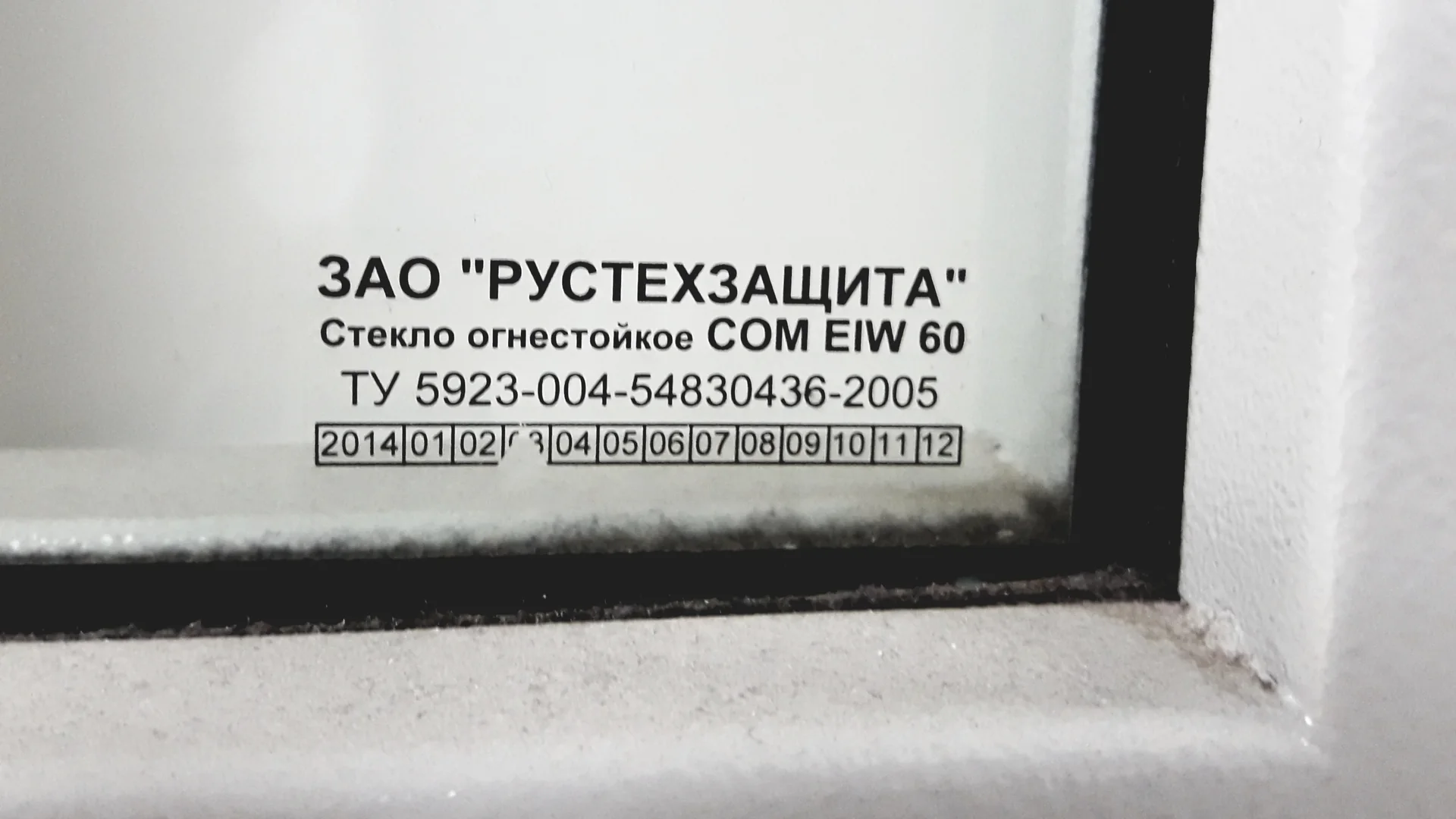
Photo: Georg Pik, CC0, via Wikimedia Commons. Resized and converted to WebP.

How do you specify fire-rated glass?
To specify fire-rated glass, state the classification the fire strategy needs to BS EN 13501-2, such as E 30, EW 30 or EI 30, and say whether the glass must insulate as well as hold back flames. Then require the glass as part of a glazing system tested to BS EN 1364-1 or BS EN 1634-1 with the same frame, beads, glazing seal and maximum pane size, give its BS EN 12600 impact class for critical locations, and ask for every pane to be permanently marked so it can be identified after installation.
Fire-resistant glass does not have a fire rating of its own. A pane of intumescent laminated glass achieves EI 30 only in the frame, with the beads, the glazing tape and up to the pane size it was tested with. Change any of those and the evidence no longer applies. That is why clauses that say "30 minute fire glass" fail: they describe a pane, when the thing that has to perform is the glazed element.
This guide covers the glass itself under Uniclass Pr_25_71_33_46 Laminated glass sheets, the code NBS Source uses for intumescent interlayer fire-resistant glass. Uniclass has no separate code for fire-resistant glass, so integrity-only toughened glass sits under Pr_25_71_33_88 Thermally toughened glass sheets and wired glass under Pr_25_71_33_97 Wired glass sheets. The doors and screens that hold the glass have their own guides.
What does a fire-rated glass pane clause need to cover?
Some properties are specific to fire-rated glass. Others belong in every product clause. A clause that leaves either out gives the contractor room to substitute.
Properties of fire-rated glass
- FinishClear, or with a slight tint from the interlayer.
- Glass manifestationNever guessFire-rated screens on corridors are often critical locations.
- Material gradeThe tested product and grade, not a generic description.
- Fire resistanceNever guessE, EW or EI and minutes, from the fire strategy.
- Identification labellingNever guessPermanent mark to identify product and rating later.
- Thermal performanceUg where fire glass forms part of the external envelope.
- Third-party certificationCertification of the glazed system, not only the glass.
- Edge treatmentLaminate edges protected from moisture; no site cutting.
- Appearance classInterlayer clarity and visual defects judged at a set distance.
- Solar factorOnly for external fire glass in insulating units.
- Light transmissionThicker insulating glass transmits less light.
- Heat soak testingOnly for toughened integrity-only glass.
- TolerancesPanes are made to size; no site trimming.
- Safety glazing classNever guessBS EN 12600 class for doors and low-level screens.
- Product typeInternal only, or external grade with UV protection.
- Acoustic performanceRw for screens to meeting rooms or classrooms.
- Spacer barOnly where the fire glass is in an insulating unit.
What every product clause needs
- Manufacturer and product referenceNamed glass product and grade; substitutions void test evidence.
- Product standardBS EN 14449 for laminated, BS EN 12150-1 for toughened.
- Installation methodGlazing method exactly as in the fire test.
- Technical submittalsClassification report or certificate covering frame and size.
- Operation and maintenance informationLike-for-like replacement and cleaning limits for interlayers.
- MaterialIntumescent laminated, gel-filled, toughened or wired.
- ThicknessThickness changes with rating; beads and frame must suit.
Uniclass Pr_25_71_33_46 Fire-rated glass. Not every property applies to every project; where one does not, say so rather than leaving it blank.
Fields marked Never guess depend on the project and should never be filled from a default or a previous job. If the information is not available yet, the clause should say so with a TBC and a reason.
Which decisions does the clause depend on?
Most properties follow from the product you choose. These depend on the project, so they need a decision from the designer before the clause is written.
- 01
Integrity only, radiation control, or insulation
Never guessBS EN 13501-2 gives glazed elements three levels. E is integrity: the glass stops flames and hot gases passing. EW adds a limit on radiant heat through the glass, 15 kW/m² measured at 1 m. EI adds insulation: the unexposed face must stay below an average temperature rise of 140 K and a maximum of 180 K. An E 30 screen can be too hot to stand next to within minutes, which is why Approved Document B limits where uninsulated glazed elements can go on escape routes, for example in protected stairways and close to floor level. The fire strategy should say which is needed, not the glazing supplier.
How to decide
- Take the period and the E, EW or EI requirement for each glazed element from the fire strategy.
- On escape routes, check the Approved Document B table that limits uninsulated glazed elements by position and area.
- Use EI glass wherever people must pass close to the glass during a fire, or where the strategy relies on it as part of a compartment wall.
- Do not upgrade E to EI casually: insulating glass is thicker and heavier and needs a frame tested for it.
Write it asFire resistance: EI 30 to BS EN 13501-2, as part of the glazed screen system tested to BS EN 1364-1. - 02
The glass is only rated in the system it was tested in
Tested systemA fire test report covers one frame type, one bead and fixing detail, one glazing seal, an orientation and a maximum pane size. The classification report then sets the field of application: how far the result can be extended. A rated pane put into an untested frame, glazed with ordinary silicone or made larger than the tested size has no evidence behind it. The Glass and Glazing Federation guidance on fire-resistant glazed systems makes the same point. Ask for third-party certification or an assessment that names the glass, the frame and the glazing method together.
How to decide
- Ask for the classification report or certificate and check the frame, bead, glazing seal and pane size against the drawings.
- Keep glass, frame and glazing materials from one tested combination; do not mix suppliers' products.
- Check orientation: glass tested vertically is not evidence for a horizontal rooflight or sloping glazing.
- Where the design exceeds the tested size, get a formal assessment before tender, not after.
Write it asThird-party certification: Glass, frame, beads and glazing materials as one system, covered by classification report or third-party certificate for the pane sizes shown. Submit before ordering. - 03
Permanent marking of every pane
Never guessOnce installed, intumescent laminated glass looks much like ordinary laminated glass. Without a permanent mark there is no practical way for the building control body, the client or a future glazier to confirm what was fitted, or to replace a broken pane like for like. The fire safety information handed over under regulation 38 should identify the glazing too. Ask for each pane to carry the manufacturer's mark with the product name and classification, and for that mark to stay visible after the beads are fitted.
How to decide
- Require a permanent etched or fired mark on every pane, not a removable label.
- Specify the mark position so it is visible after glazing, usually a bottom corner.
- Include the glazing schedule, product references and test evidence in the fire safety information at handover.
- Ask the installer to photograph the marks before practical completion.
Write it asIdentification labelling: Each pane permanently marked with manufacturer, product reference and classification, visible after glazing. - 04
Impact safety and manifestation
Never guessFire-rated glass in doors, side panels and low-level screens is also in a critical location under Approved Document K. It needs a BS EN 12600 class as well as a fire classification, and the impact class depends on the product and thickness, so it has to be checked for the exact pane offered. Where the screen faces a corridor or forms a large clear area, the glass manifestation required by Approved Document K applies as well, and applied film must not interfere with the fire performance, so check the film or etch with the glass manufacturer.
How to decide
- Find the critical locations from Approved Document K diagrams and state the BS EN 12600 class for those panes.
- Check the impact class in the glass manufacturer's data for the exact thickness and rating offered.
- Set manifestation heights on the screen elevations and ask the glass manufacturer to confirm the method.
- For laminated fire glass, confirm that both faces are suitable for the manifestation method chosen.
Write it asSafety glazing class: Class 1(B)1 to BS EN 12600 where in critical locations. Glass manifestation: as screen elevations, method approved by glass manufacturer. - 05
Internal or external grade
ExposureMost intumescent interlayers react badly to ultraviolet light and moisture, which is why standard grades are for internal use only. Exposed outside, the interlayer can cloud, bubble or lose performance. External fire glazing, for example near a boundary or below an opening in another compartment, uses a product made for it, often built into an insulating glass unit with a UV-filtering pane. The edges also need protecting from water in the frame, so the glazing system should drain and ventilate the rebate as the fire test allows.
How to decide
- Mark which fire-rated panes are external, or internal but exposed to strong sunlight or moisture, such as pool halls.
- Specify an external grade product and confirm the unit build-up with the manufacturer.
- Check the Ug, g-value and light transmission of the insulating unit for the energy model.
- Confirm the frame drainage detail is consistent with the fire test evidence.
Write it asProduct type: Intumescent laminated fire-resistant glass, internal grade. External panes: external grade within insulating unit, as glazing schedule.
The values under "Write it as" are examples. The right value depends on the location, the use and the fire strategy.
Which standards should the clause cite?
Cite the product standard the declaration of performance refers to, the code of practice for installation, and the test method behind each value you set. A value without its test method cannot be checked against a submittal.
- BS EN 13501-2
- Fire classification of construction products and building elements. Classification using data from fire resistance and/or smoke control tests, excluding ventilation services
The classification system for fire resistance: E for integrity, W for radiation and I for insulation, with the period in minutes.
In the clause "Fire resistance: EI 30 to BS EN 13501-2."
- BS EN 1364-1
- Fire resistance tests for non-loadbearing elements. Walls
The test method for glazed screens and partitions. Fire-resistant glass is tested as part of a complete screen to this standard.
In the clause "Glazed screen system tested to BS EN 1364-1."
- BS EN 1634-1
- Fire resistance and smoke control tests for door and shutter assemblies, openable windows and elements of building hardware. Fire resistance test for door and shutter assemblies and openable windows
The test method for doors with fire-resistant glazing. Vision panels are only covered for the door and glass combination tested.
In the clause "Glazing in fire doors: as tested to BS EN 1634-1 with the door supplied."
- BS EN 357
- Glass in building. Fire resistant glazed elements with transparent or translucent glass products. Classification of fire resistance
Classification of glazed elements, which makes clear that the classification applies to the glazed element, not the glass alone.
In the clause Cite where the supplier's evidence is classified under it: "Classified to BS EN 357."
- BS EN 14449
- Glass in building. Laminated glass and laminated safety glass. Evaluation of conformity/Product standard
The product standard for laminated glass, which covers most intumescent interlayer fire-resistant glass.
In the clause "Laminated fire-resistant glass to BS EN 14449. Submit declaration of performance."
- BS EN 12600
- Glass in building. Pendulum test. Impact test method and classification for flat glass
The impact classification Approved Document K refers to for glass in critical locations, which fire glass in doors and screens must also meet.
In the clause "Class 1(B)1 to BS EN 12600 in critical locations."
- BS EN 12150-1
- Glass in building. Thermally toughened soda lime silicate safety glass. Definition and description
The product standard for toughened glass, relevant to integrity-only fire glass based on special toughened soda lime glass.
In the clause "Toughened fire-resistant glass to BS EN 12150-1, permanently marked."
Confirm the current edition of each standard at every issue. Avoice's State of UK Specifications 2026 found a withdrawn standard cited in 40% of specifications at contract issue.
For the regulations behind these choices, see Approved Document B explained, Fire strategy reports explained, or search the Avoice Regulations library.
How do you write it in CAWS?
In CAWS, fire-resistant glass is written in L40 General glazing. NBS Source lists intumescent laminated fire glass against L40/505 Fire-resistant tape/ Strip glazing, the clause that describes how the pane is glazed into a fire-resisting frame. The clause brings together the glass, its classification, the glazing materials and the frame it must match, so all the items that make up the tested system sit in one place.
The frame itself is usually specified elsewhere, in L10 for screens or L20 for doors, so the L40 clause has to point to it and to the test evidence that covers both. The L40 general clauses deal with glass generally, workmanship and manifestation, and the type clause should refer to them rather than repeat them.
- Description
- Internal fire-resisting glazed screen to corridor
- Glass manufacturer
- Submit proposals
- Product reference
- Submit proposals
- Glass type
- Intumescent laminated fire-resistant glass, internal grade
- Standard
- BS EN 14449. Submit declaration of performance
- Fire resistance
- EI 30 to BS EN 13501-2, as part of the glazed screen system
- Test evidence
- BS EN 1364-1, covering frame, beads, glazing materials and pane sizes shown
- Frame
- Timber screen frame, as the L10 screen clause
- Glazing materials
- Intumescent glazing tape and setting blocks as tested
- Maximum pane size
- Within the tested field of application
- Impact classification
- Class 1(B)1 to BS EN 12600 in critical locations
- Marking
- Each pane permanently marked, visible after glazing
- Manifestation
- TBC Manifestation design for corridor screens not yet agreed with client. Resolve before glass is ordered.
- Workmanship
- As clause 150
Illustrative, not from a real project. One property is left as a TBC with a reason so it can be tracked and closed before issue.
Clauses the type clause relies on
- L40/110
- Preglazing Whether frames are glazed in the factory or on site, which affects who holds the test evidence.
- L40/150
- Workmanship and positioning generally Glazing to the BS 6262 series and to the system manufacturer's instructions.
- L40/155
- Glass generally Product standards for each glass type, edges and visual quality.
- L40/630
- Manifestation Heights, method and contrast of manifestation on glazed screens and doors.
Clause numbers vary between NBS versions and practice masters. 505 is the L40 reference NBS Source gives for intumescent laminated fire glass, and 110, 150 and 155 follow published NBS L40 specifications; check each exists in your own L40, and that the frame clause it points to is real.
How do you write it in Uniclass?
In Uniclass the glazed element is the system. For a fire-resisting internal screen use Ss_25_10_35_35 Glazed screen systems, and describe the screen's fire classification, frame, glazing method and test evidence there. The glass is a product clause under its Pr code.
This split suits fire glazing well, because the fire rating really belongs to the system. The product clause holds the properties of the glass that the supplier must prove (product, thickness, impact class, marking), and the system clause holds the classification of the whole element and the evidence that covers it.
- Description
- Internal fire-resisting glazed screen to corridor
- Fire resistance of screen
- EI 30 to BS EN 13501-2
- Test evidence
- BS EN 1364-1, covering frame, glass, glazing materials and pane sizes
- Frame
- Timber screen frame as tested
- Glass
- Pr_25_71_33_46 Laminated glass sheets (FG01)
- Glazing materials
- Intumescent glazing tape and beads as tested
- Manifestation
- To Approved Document K Section 7, as screen elevations
- Manufacturer
- Submit proposals
- Product reference
- Submit proposals
- Product standard
- BS EN 14449
- Product type
- Intumescent laminated fire-resistant glass, internal grade
- Fire resistance
- EI 30 to BS EN 13501-2 in the tested screen system
- Safety glazing class
- Class 1(B)1 to BS EN 12600
- Identification labelling
- Permanent mark with product and classification
- Tolerances
- Made to size; no site cutting
- Thickness
- TBC Depends on the system chosen for EI 30 at the tested pane size. Resolve before tender.
Illustrative. Performance of the finished system sits in the system clause; properties of the product sit in the product clause.
In NBS Chorus, Uniclass product clauses also carry an NBS reference (for laminated glass sheets, 45-65-40/320). Use whichever system your practice's masters use, but keep CAWS and Uniclass references out of the same specification.
What goes in the spec, and what goes in the schedule?
The specification defines each type once. The schedule and drawings say where each type goes.
In the specification
What the product is and how it performs and is installed. Written once per type.
In the schedule or drawings
Where each type goes and how much of it. Changes with every plan revision.
The fire strategy drawings decide which glazed elements need a rating and which class. Keep that on a glazing schedule cross-referenced to the strategy, and keep the clause to the system, the evidence and the glass.
What are the common mistakes?
Most problems are a missing property, a property filled with the wrong kind of value, or a decision left silently open.
- "30 minute fire glass" with no class. It does not say whether integrity or insulation is needed. State E, EW or EI and the period to BS EN 13501-2.
- Fire glass in an untested frame. A rated pane in a frame it was never tested with has no evidence. Specify glass, frame and glazing materials as one tested system.
- Panes larger than the test. Feature screens often exceed the maximum tested size. Check pane sizes against the field of application before tender.
- Standard silicone in a fire screen. Ordinary glazing sealant can fail early in a fire. Use the glazing tape, seals and beads named in the test evidence.
- Internal grade glass outside. Most intumescent interlayers need protection from UV and water. Use an external grade product where the pane is exposed.
- No marking on the glass. Without a permanent mark no one can check what was fitted. Ask for every pane to be marked and photographed.
How Avoice helps
Avoice drafts fire glazing clauses from your fire strategy, door and screen schedules, and shows what still needs evidence.
- Drafts from your drawings and schedules
It reads which screens and doors are fire-rated from the fire strategy and glazing schedule, and writes the L40 or Uniclass clause with the class, test standard and system lines those documents support.
- Leaves a TBC with a reason
If the class for a screen is missing from the strategy or the pane size is beyond what has been confirmed, the clause says TBC with the reason, and the item goes into the project TBC register to close before tender.
- Writes in your format
CAWS L40 or Uniclass, adapted from your practice's own master clauses.
- Checks against everything else
QA/QC flags a screen marked EI 30 on the fire strategy but E 30 in the clause, an L40 clause pointing to a deleted L10 frame clause, or a withdrawn standard in a glass clause.
- Keeps the evidence with the clause
Classification reports, certificates and declarations of performance sit in the Product Room linked to the clause, so a substitute glass or frame can be checked against the tested combination.
Related guides: How to specify fire doors, How to specify frameless glass doors, How to specify glazed partitions.
Software can draft and check. The designer still chooses the product and is responsible for the specification.
Draft your fire-rated glass pane clause in Avoice
Upload your drawings and schedules. Avoice drafts the clause in CAWS or Uniclass, cites the standards and flags anything your information does not settle.
This guide is for general education and is not professional advice. Check current editions of standards and Approved Documents, the manufacturer's data, and the requirements of your project before relying on any clause.