
How to specify fire retardant paints
What a fire retardant paint clause has to say when a coating is used to upgrade the reaction to fire of timber, boards or existing linings, the decisions behind it, the standards to cite, and how to write it in CAWS and in Uniclass.
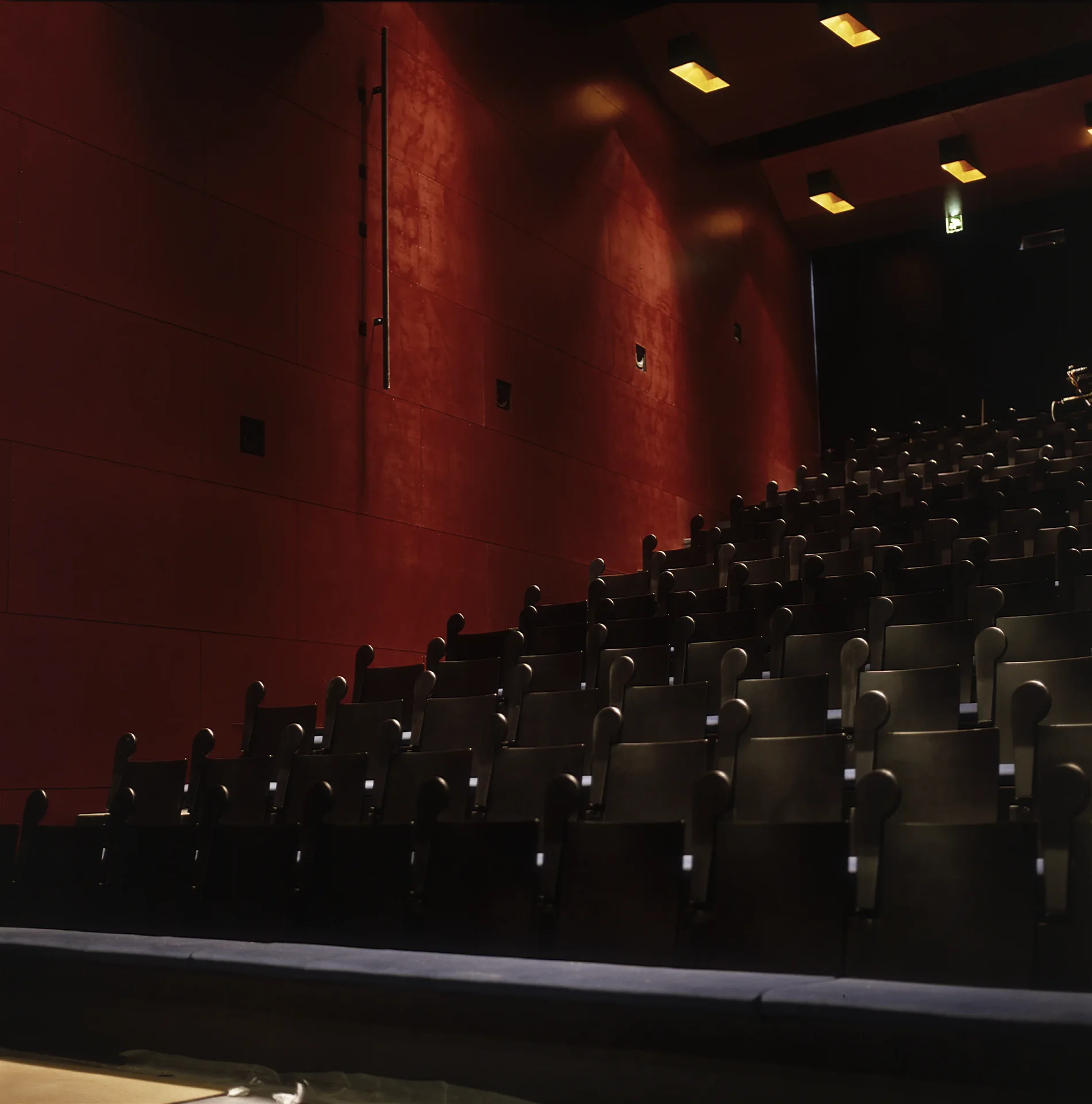
Photo: Marko Mäkinen, CC BY 2.0, via Wikimedia Commons. Resized and converted to WebP.
,_1998.jpg)
How do you specify fire retardant paints?
To specify fire retardant paint, state the Euroclass the lining has to achieve under BS EN 13501-1, taken from the fire strategy, and require a classification report for the coating system on the same substrate, thickness and existing finish as the project. Fix the coat build-up and maximum spreading rate the classification depends on, the fire retardant durability class for the location, and how application will be recorded. It improves reaction to fire only; it does not give fire resistance.
Fire retardant paints are used to bring timber, plywood, MDF or old painted surfaces up to the lining class a fire strategy asks for, typically on escape routes or in assembly spaces where exposed wood is part of the design. The paint only achieves the class in the combination it was tested in: that substrate, that thickness, that number of coats at that spreading rate, often with a named topcoat. Change any of those and the evidence may no longer apply.
This guide covers Uniclass Pr_35_31_68_29 Flame-retardant coatings. Intumescent coatings that protect structural steel are a different product with a different test basis, Pr_35_31_68_43, covered in the intumescent paint guide. Fire-retardant impregnation treatments for timber sit under Pr_35_31_67.
What does a fire retardant paint clause need to cover?
Some properties are specific to fire retardant paints. Others belong in every product clause. A clause that leaves either out gives the contractor room to substitute.
Properties of fire retardant paints
- Reaction to fire classificationNever guessEuroclass from the fire strategy, on the real substrate.
- Coat build-upBasecoats, topcoats and maximum spreading rate per coat.
- Product typeClear, opaque, or upgrade over existing paint.
- Fire retardant durability classNever guessBS EN 16755 class for interior dry, humid or exterior use.
- Sample approvalSample panel on the specified substrate.
- FinishColour within the classified system.
- Coating systemBasecoat and topcoat from one tested system.
- Binder type and gradeWater-based or solvent-based system as tested.
- Fire resistanceNever guessNot provided by these coatings; do not claim it.
- Gloss levelMatt to gloss within the tested topcoats.
What every product clause needs
- Manufacturer and product referenceThe exact basecoat and topcoat named in the classification.
- Product standardClassification report to BS EN 13501-1 for the system.
- Installation methodCoats and spreading rates exactly as tested.
- Technical submittalsClassification report, field of application, data sheet.
- Operation and maintenance informationWhich overcoats keep the class, and the application record.
- SubstrateSpecies or board, thickness, density and any existing coatings.
- Application conditionsTemperature, humidity and timber moisture during application.
Uniclass Pr_35_31_68_29 Fire retardant paint. Not every property applies to every project; where one does not, say so rather than leaving it blank.
Fields marked Never guess (reaction to fire classification, fire retardant durability class and fire resistance) depend on the project and should never be filled from a default or a previous job. If the information is not available yet, the clause should say so with a TBC and a reason.
Which decisions does the clause depend on?
Most properties follow from the product you choose. These depend on the project, so they need a decision from the designer before the clause is written.
- 01
The class, on the substrate actually used
Never guessApproved Document B sets lining classes for walls and ceilings by space, and the fire strategy translates that into a Euroclass for each area. A fire retardant coating is classified to BS EN 13501-1 as a system on a substrate, so the classification report and its field of application decide whether it covers your 18 mm birch plywood or your painted softwood boarding. Since March 2025 Approved Document B in England no longer gives the national Class 0 route for reaction to fire, so a data sheet that only quotes Class 0 or BS 476 results is not enough for new work.
How to decide
- Take the required Euroclass for each area from the fire strategy, not from a general assumption about corridors.
- Ask for the classification report and check its field of application covers the substrate type, thickness and density.
- Reject evidence that relies only on Class 0 or BS 476 national tests for new work in England.
- Where the substrate is outside the report, ask the manufacturer for a field of application extension or choose another route.
Write it asReaction to fire: Class B-s1,d0 to BS EN 13501-1, as fire strategy, on the specified plywood. Submit classification report and field of application. - 02
Durability: interior, humid or exterior
Never guessA fire retardant system that works on day one can lose performance if it absorbs moisture, is leached by washing, or weathers. BS EN 16755 classifies fire-retardant treated wood products for interior dry (INT1), interior humid (INT2) and exterior (EXT) use, and coating manufacturers increasingly classify their systems this way. Exterior classifications can depend on maintenance of the topcoat, so the classification comes with a maintenance obligation. Swimming pool halls, kitchens, changing rooms and anywhere surfaces are regularly washed are humid uses, even though they are inside.
How to decide
- Dry heated interiors: INT1.
- Humid or regularly washed interiors: INT2.
- Exterior or semi-exposed timber: EXT, and record the topcoat maintenance it relies on in the O&M information.
- Check whether the durability classification is for the same coating system and substrate as the reaction to fire classification.
Write it asFire retardant durability: DRF class INT1 to BS EN 16755 (INT2 in humid or regularly washed areas). Submit classification. - 03
Reaction to fire is not fire resistance
Never guessFire retardant paint slows ignition and flame spread across a surface. It does not make a door, partition, floor or structural element resist fire for a period, and it is not a substitute for intumescent protection of steel, which is assessed to BS EN 13381-8. Confusion appears in two places: old timber doors upgraded with paint on the assumption that they become fire doors, and timber or steel structure painted to satisfy a lining class with the fire resistance question never asked. If an element needs a fire resistance period, that is a separate, tested solution.
How to decide
- Check whether the element needs fire resistance (REI, EI) as well as a lining class.
- Doors needing fire resistance: tested door assemblies or certified upgrade systems, not paint alone.
- Steel needing a fire resistance period: intumescent coating to BS EN 13381-8, specified separately.
- Write "no fire resistance claimed" into the clause so the coating is not relied on later.
Write it asFire resistance: None claimed. Coating improves reaction to fire of the lining only. - 04
New timber or existing painted surfaces
Existing liningsOn new, bare timber the substrate is known and the classification can be matched. Existing linings are harder. Old paint layers add fuel and may not bond well, so the result depends on what is already there. Real manufacturers' M60 masters note that redecoration of existing painted surfaces depends on the existing coating layers and their total thickness, and offer separate overcoat and upgrade systems. That means a survey of the existing paint before the system is chosen, and sometimes stripping back to bare substrate.
How to decide
- New timber and boards: specify the system for the bare substrate and keep other coatings off it.
- Existing painted linings: survey coating layers and thickness, then choose the manufacturer's overcoat or upgrade system for that condition.
- Where existing layers are thick, flaking or unknown: strip to bare substrate.
- Heritage linings: agree any stripping with the conservation officer before it is specified.
Write it asExisting surfaces: Survey existing coating layers and total thickness; submit survey and manufacturer's system recommendation before ordering. - 05
Coats, spreading rate and records
ApplicationThe classification depends on the amount of coating on the surface, so a fire retardant clause is one of the few paint clauses where the spreading rate is a performance requirement. Manufacturers' clauses give a maximum spreading rate per coat and a minimum wet film thickness, and a decorator applying thin coats to make the material go further will not achieve the class. The only way to know is to measure wet film thickness during application and record quantities used per area. Some manufacturers issue a certificate of application when their requirements have been followed.
How to decide
- Write the number of coats and maximum spreading rate per coat from the classified system into the clause.
- Require wet film thickness readings during application, recorded by area.
- Ask for material quantities delivered and used to be reconciled against areas coated.
- Require the manufacturer's certificate of application, where one is offered, for the O&M manual.
Write it asApplication: Two basecoats at manufacturer's maximum spreading rate per coat, wet film thickness measured and recorded. Submit record and certificate of application.
The values under "Write it as" are examples. The right value depends on the location, the use and the fire strategy.
Which standards should the clause cite?
Cite the product standard the declaration of performance refers to, the code of practice for installation, and the test method behind each value you set. A value without its test method cannot be checked against a submittal.
- BS EN 13501-1
- Fire classification of construction products and building elements. Classification using data from reaction to fire tests
The Euroclass system (A1 to F, with smoke and droplet ratings) used to classify a coated lining. The classification report names the substrate and the field of application.
In the clause "Reaction to fire: Class B-s1,d0 to BS EN 13501-1 on the specified substrate."
- BS EN 13823
- Reaction to fire tests for building products. Building products excluding floorings exposed to the thermal attack by a single burning item
The single burning item (SBI) test behind classes A2 to D for wall and ceiling products, including coated timber.
In the clause Not usually cited directly; ask for the classification report that draws on it.
- BS EN 13238
- Reaction to fire tests for building products. Conditioning procedures and general rules for selection of substrates
How test substrates are chosen and when a result on one substrate can represent another. This is why the substrate in the report matters.
In the clause Use it to frame the evidence check: "substrate within the field of application of the classification".
- BS EN 16755
- Durability of reaction to fire performance. Classes of fire-retardant treated wood products in interior and exterior end use applications
Durability classes INT1 (interior dry), INT2 (interior humid) and EXT (exterior) showing whether the fire performance lasts in use.
In the clause "Fire retardant durability: DRF class INT1 to BS EN 16755."
- BS EN 13381-8
- Test methods for determining the contribution to the fire resistance of structural members: applied reactive protection to steel members
The assessment method for intumescent protection of steel. Cited here to make clear it is a different product and test basis.
In the clause Do not cite it for a flame retardant paint. Reference it only in a separate intumescent clause.
- BS 6150
- Painting of buildings. Code of practice
The UK code of practice for preparation, application and maintenance of paint systems, including on timber.
In the clause "Workmanship: to BS 6150 and the coating manufacturer's instructions for the classified system."
Confirm the current edition of each standard at every issue. Avoice's State of UK Specifications 2026 found a withdrawn standard cited in 40% of specifications at contract issue.
For the regulations behind these choices, see Approved Document B explained, Fire strategy reports explained, or search the Avoice Regulations library.
How do you write it in CAWS?
In CAWS, fire retardant coatings for linings are written in M60 alongside the other paint systems, not in M61, which is for intumescent coatings to steelwork. Manufacturers' M60 masters group their flame retardant systems together in the 170s, with separate clauses for new surfaces, overcoating and upgrading existing paint, and each gives the surfaces, preparation, coats and spreading rates.
The type clause leans on a general clause for flame retardant coatings, which in real masters requires fire test evidence from the manufacturer, confirmation that the testing suits the surface, and attention to existing coating layers when redecorating. Keep that clause, and make sure the compatibility clause covers any fire-retardant pretreatment already in the timber.
- Description
- Flame retardant basecoat and topcoat system, new plywood linings
- Manufacturer
- Submit proposals
- Product reference
- Submit proposals
- Surfaces
- 18 mm birch plywood wall linings, as K13 clause
- Reaction to fire
- Class B-s1,d0 to BS EN 13501-1 on the specified plywood, as fire strategy
- Fire retardant durability
- DRF class INT1 to BS EN 16755
- Fire resistance
- None claimed
- Preparation
- As clauses 400 and 481; no other coatings on surfaces to be treated
- Initial coats
- Flame retardant basecoat, number of coats and maximum spreading rate as classification
- Finishing coats
- Topcoat named in the classification, number of coats as manufacturer
- Colour
- TBC Client colour selection outstanding; manufacturer to confirm the colour is within the classified system. Resolve before ordering.
- Gloss
- Matt
- Records
- Wet film thickness readings and quantities used, by area
- Certification
- Manufacturer's certificate of application for O&M information
- Sample panel
- On the specified plywood, approved before full application
Illustrative, not from a real project. One property is left as a TBC with a reason so it can be tracked and closed before issue.
Clauses the type clause relies on
- M60/210A
- Flame retardant coatings Fire test evidence from the manufacturer, testing appropriate to the surface, and existing coating layers on redecoration.
- M60/220
- Compatibility Materials compatible with each other and not inhibiting fire-retardant pretreatments.
- M60/440A
- Previously coated surfaces generally Assessment and preparation of existing paint before overcoating.
- M60/481
- Uncoated wood Preparation of new timber and boards before the first coat.
- M60/711A
- Coating generally Conditions during application and no thinning unless the manufacturer recommends it.
Clause numbers vary between NBS versions and practice masters. The numbers here follow a manufacturer's NBS-format M60 master; what matters is that the type clause refers to clauses that exist in your M60.
How do you write it in Uniclass?
In Uniclass the coating system sits under Ss_40_90_60_85 Special coating systems. The system clause describes the substrate, the preparation, the full coat sequence and the finished performance: the Euroclass of the coated lining and its durability class.
The coating is a product clause under Pr_35_31_68_29 Flame-retardant coatings, holding the named basecoat and topcoat, binder and evidence. Because the class depends on the pairing, keep basecoat and topcoat in the same product clause, or give the topcoat its own clause that states it must be the one named in the classification.
- Description
- Flame retardant coating system to new plywood wall linings
- Substrate
- 18 mm birch plywood, as wall lining system clause
- Coating
- Pr_35_31_68_29 Flame-retardant coatings (FR01)
- Coat build-up
- Basecoats and topcoat as classification, maximum spreading rate per coat
- Reaction to fire of finished lining
- Class B-s1,d0 to BS EN 13501-1, as fire strategy
- Durability
- DRF class INT1 to BS EN 16755
- Fire resistance
- None claimed
- Records
- Wet film thickness and quantities by area; certificate of application
- Manufacturer
- Submit proposals
- Product reference
- Submit proposals
- Product type
- Pigmented flame retardant basecoat with matching topcoat
- Binder
- Water-based
- Classification
- Class B-s1,d0 to BS EN 13501-1 on plywood within the field of application
- Durability
- DRF class INT1 to BS EN 16755
- Colour
- TBC Client colour selection outstanding; manufacturer to confirm the colour is within the classified system. Resolve before ordering.
- Gloss
- Matt
- Technical submittals
- Classification report, field of application, data sheet with spreading rates
Illustrative. Performance of the finished system sits in the system clause; properties of the product sit in the product clause.
In NBS Chorus the Uniclass product clause for flame-retardant coatings carries the NBS reference 45-35-84/406. Use whichever your practice's masters use, but do not mix CAWS and Uniclass references in one specification.
What goes in the spec, and what goes in the schedule?
The specification defines each type once. The schedule and drawings say where each type goes.
In the specification
What the product is and how it performs and is installed. Written once per type.
In the schedule or drawings
Where each type goes and how much of it. Changes with every plan revision.
The fire strategy drawings show which areas need which lining class; the decorations schedule should carry that through to each surface with the coating type mark (FR01, FR02). Keep the class in one place and refer to it, so a revised fire strategy does not leave the clause and schedule disagreeing.
What are the common mistakes?
Most problems are a missing property, a property filled with the wrong kind of value, or a decision left silently open.
- "Class 0 fire retardant paint". Approved Document B in England no longer gives the national class route for reaction to fire. Specify the Euroclass.
- Evidence on the wrong substrate. A report on non-combustible board does not cover timber. Check the field of application.
- Any topcoat over the basecoat. The class depends on the tested topcoat. Name it, and tell the client what may be used to redecorate.
- Paint as a fire door upgrade. Coatings do not give fire resistance. Use tested door assemblies or certified upgrade systems.
- Spreading rate left to the decorator. Thin coats miss the class. Set the maximum rate and require wet film checks.
- Interior class in a pool hall. Humidity can degrade the performance. Specify INT2, or EXT outside.
How Avoice helps
Avoice's spec writer drafts flame retardant coating clauses from your fire strategy and finishes information, and shows what it could not settle.
- Drafts from your drawings and schedules
It reads the lining classes from the fire strategy drawings and the coating types (FR01 to new plywood, FR02 overcoat to existing panelling) from the decorations schedule, then picks the M60 clause or the Uniclass system and product headings.
- Leaves a TBC with a reason
If the existing coatings on retained panelling have not been surveyed, or the client has not chosen a colour within the classified range, the line says TBC and why. Every TBC joins one project register to close before tender.
- Writes in your format and style
Choose CAWS or Uniclass. Avoice adapts your practice's own M60 masters rather than replacing them with generic text.
- Checks the clause against everything else
QA/QC flags a lining class in the clause that differs from the fire strategy, a coating clause quoting Class 0, or a door schedule relying on paint for fire resistance.
- Keeps product data in one place
Classification reports, fields of application and certificates of application sit in the Product Room, linked to the clause, alongside the Approved Document B guidance in Avoice Regulations.
Related guides: How to specify intumescent paint, How to specify plywood, How to specify emulsion paint.
Software can draft and check. The designer still chooses the product and is responsible for the specification.
Draft your fire retardant paint clause in Avoice
Upload your drawings and schedules. Avoice drafts the clause in CAWS or Uniclass, cites the standards and flags anything your information does not settle.
This guide is for general education and is not professional advice. Check current editions of standards and Approved Documents, the manufacturer's data, and the requirements of your project before relying on any clause.