
How to specify masonry paint
What an external masonry paint clause has to say, the decisions behind it, the standards to cite, and how to write it in CAWS and in Uniclass.
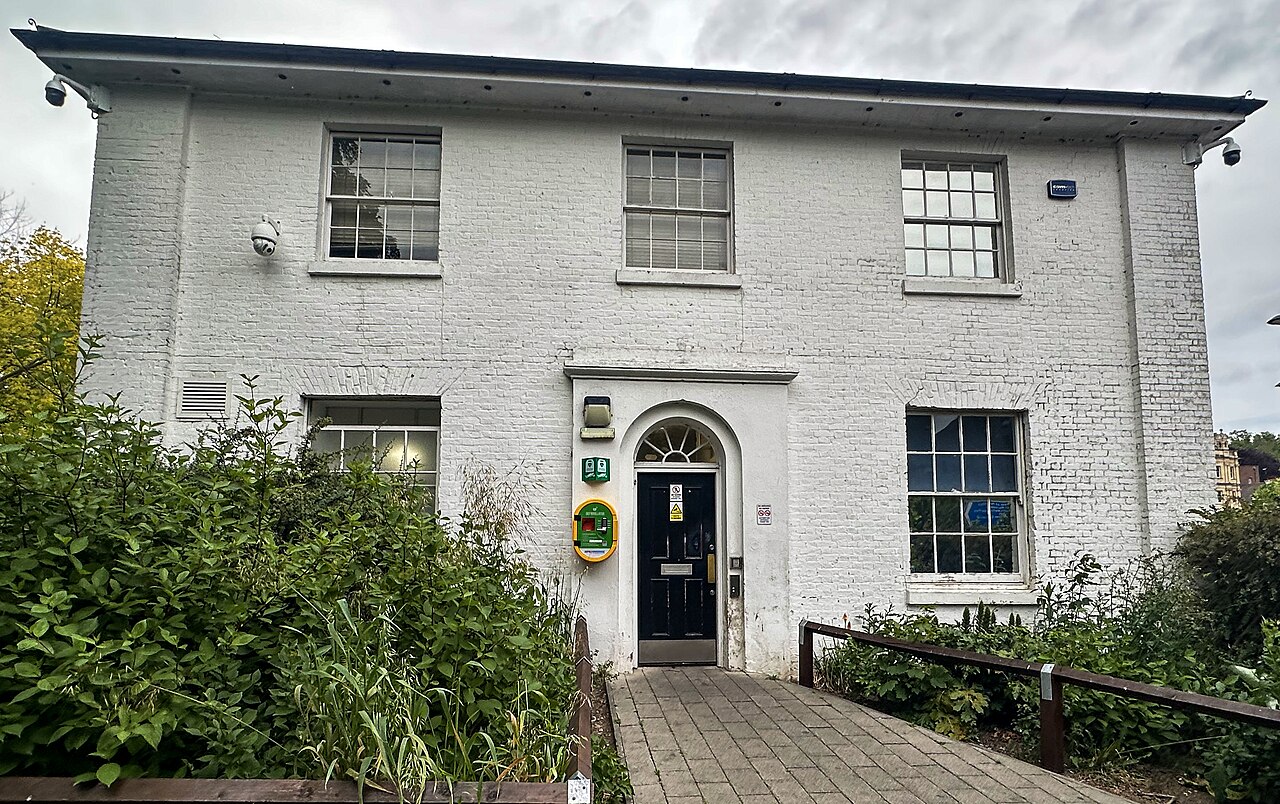
Photo: Sunolafjagtenben-hur, CC0, via Wikimedia Commons.

How do you specify masonry paint?
To specify masonry paint, state the binder type and its classification to BS EN 1062-1, in particular the water vapour permeability class (V) and liquid water permeability class (W), and check it is suitable for the substrate, especially on lime renders and solid walls. Specify the full system from one manufacturer, the preparation and application conditions to BS 6150, the colour against a sample panel, and confirm the coating's fire classification where external wall rules apply.
Masonry paint is often treated as a colour decision for the elevation, with the product chosen by whoever prices the decorating. The trouble is that the wall is behind it. A paint that keeps rain out but traps moisture in a solid brick or lime-rendered wall can cause damp, salt damage and paint blistering inside a few seasons, while a very open paint on a dense render may let in more rain than the wall can handle. BS EN 1062-1 gives classes for both, and the clause should use them.
This guide covers Uniclass Pr_35_31_22_96 Water-based masonry paints. Uniclass separates Pr_35_31_22_72 Resin-based breathable masonry paints, Pr_35_31_22_77 Silicate-based masonry coatings and Pr_35_31_22_81 Solvent-based masonry paints, so the heading should follow the binder you choose.
What does a masonry paint clause need to cover?
Some properties are specific to masonry paint. Others belong in every product clause. A clause that leaves either out gives the contractor room to substitute.
Properties of masonry paint
- Product typeWater-based masonry paint for external walls.
- MaterialBinder: acrylic, siloxane, silicone or silicate.
- FinishColour reference and texture: smooth or fine textured.
- Gloss levelUsually matt; sheen exaggerates surface defects outside.
- Moisture resistanceLiquid water permeability class W to BS EN 1062-1.
- Water vapour permeabilityClass V or sd value to BS EN 1062-1.
- Volume solidsSets dry film per coat and real coverage.
- Coat build-upPrimer or stabiliser, and number of finish coats.
- Coating systemAll coats from one manufacturer's system.
- Application rateSpreading rate per coat to reach the declared performance.
- Curing timeRain-free and recoat intervals for the programme.
- Reaction to fire classificationNever guessExternal wall rules for the building, to BS EN 13501-1.
- VOC contentWithin the 2012 VOC Regulations for masonry coatings.
- Third-party certificationAgrément certificate where the system claims long life.
- Sample approvalSample panel on the real wall, viewed in daylight.
What every product clause needs
- Manufacturer and product referenceNamed manufacturer and product, or a performance description.
- Product standardClassified to BS EN 1062-1 on the data sheet.
- Installation methodBS 6150 and the manufacturer's application instructions.
- Technical submittalsData sheet, BS EN 1062-1 classes, fire classification, warranty.
- Operation and maintenance informationColour references, batch numbers, cleaning and repainting cycle.
- SubstrateRender, brick, block or concrete, its age and existing coatings.
- Application conditionsMinimum temperature, dew point and rain-free period after application.
Uniclass Pr_35_31_22_96 Masonry paint. Not every property applies to every project; where one does not, say so rather than leaving it blank.
Fields marked Never guess (reaction to fire classification) depend on the project and should never be filled from a default or a previous job. If the information is not available yet, the clause should say so with a TBC and a reason.
Which decisions does the clause depend on?
Most properties follow from the product you choose. These depend on the project, so they need a decision from the designer before the clause is written.
- 01
Fire and external walls
Never guessMasonry paint is a thin coating, but regulation 2(6) defines the external wall to include any decoration or other finish applied to its external surface, and the regulation 7(3) exemptions do not list paint. The Building Regulations limit the combustibility of external wall materials on some buildings. Regulation 7(2) applies to relevant buildings with a storey 18 m or more above ground, and Approved Document B also asks for A2-s1,d0 or better materials in the external walls of residential buildings with a storey 11 m or more, both with listed exemptions. Whether and how a coating is assessed is a question for the fire engineer, not the decorator. Record the paint's classification so the question can be answered.
How to decide
- Check the building height and use against regulation 7(2) and Approved Document B with the fire engineer.
- Ask the manufacturer for a classification to BS EN 13501-1 for the coating on a substrate that represents the wall.
- Where the fire strategy sets a class for the external wall, put it in the clause and require evidence before ordering.
Write it asReaction to fire: Coating system classified to BS EN 13501-1 on a representative mineral substrate. Submit classification report for review by the fire engineer. - 02
Water vapour permeability
BreathabilityBS EN 1062-1 classifies a coating's water vapour transmission into classes V1, V2 and V3, with V1 the most open. Manufacturers also give the sd value, the equivalent air layer thickness: the lower the sd, the more freely the wall dries out through the paint. V1 corresponds to an sd below 0.14 m. Solid masonry, lime renders and older buildings rely on drying outwards, so a low-permeability coating on them can trap moisture behind the film. "Breathable" on a tin is not a classification; ask for the class and the sd value.
How to decide
- Solid walls, lime renders and listed or traditional buildings: V1, or a silicate or lime-based coating chosen with the conservation officer.
- Modern cement renders and cavity walls: V1 or V2, balanced against water resistance.
- Ask for the sd value measured to BS EN ISO 7783 and the V class on the data sheet.
Write it asWater vapour permeability: Class V1 to BS EN 1062-1, sd less than 0.14 m when tested to BS EN ISO 7783. - 03
Liquid water permeability
RainThe other half of the balance is how much rain the coating lets through. BS EN 1062-1 classes liquid water permeability from W1 to W3, with W3 the lowest, measured to BS EN 1062-3. On exposed elevations a coating that sheds water well keeps the render and masonry drier and reduces frost and algae problems, but a coating that is too tight on a wall that cannot dry elsewhere causes the opposite. Good masonry coatings combine a low W class with a high V class; the specification should ask for both.
How to decide
- Sheltered elevations and dense substrates: W2 may be adequate.
- Exposed elevations, coastal sites and rendered walls with a history of damp: W3 with V1 or V2.
- Ask for the w-value measured to BS EN 1062-3 alongside the W class.
Write it asLiquid water permeability: Class W3 to BS EN 1062-1, tested to BS EN 1062-3. - 04
The substrate and the binder
CompatibilityThe binder has to suit the wall. Acrylic masonry paints suit cement renders and most modern masonry; silicate paints bond chemically with mineral substrates and stay very open; silicone and siloxane paints combine water repellence with good vapour permeability. Some mainstream masonry paints say on their data sheets that they are not suitable for lime and other natural renders or for dense, non-porous brick such as engineering bricks. New render may need to cure, and efflorescence must be removed first. The clause should name the substrate so the manufacturer can confirm suitability in writing.
How to decide
- Lime render and lime-washed walls: limewash or a mineral paint confirmed by its manufacturer as suitable for lime.
- New cement render: allow it to cure for the period the paint manufacturer requires, then use their stabiliser if needed.
- Previously painted walls: test adhesion and identify the existing coating before choosing the system.
- Ask the manufacturer to confirm the system for the substrate in writing.
Write it asSubstrate: Sand and cement render. Paint manufacturer to confirm suitability of the system for the substrate in writing before ordering. - 05
Application conditions and programme
WeatherExternal painting depends on the weather in a way that interior decoration does not. Manufacturers set minimum air and surface temperatures, a margin above dew point, and a period after application in which rain will mark or wash the film, especially in darker colours. A clause that does not repeat those limits leaves the decorator under programme pressure to paint in October drizzle. Scaffold planning, adaptation and sheeting all depend on knowing these limits before tender.
How to decide
- Copy the manufacturer's minimum temperature and dew point margin into the clause.
- Programme external painting for the drier months, and allow for weather downtime in the contract period.
- Require the contractor to stop work and protect fresh coatings when rain is forecast within the manufacturer's rain-free period.
Write it asApplication conditions: Within the manufacturer's limits for air and surface temperature and dew point. No application where rain is expected within the manufacturer's stated rain-free period.
The values under "Write it as" are examples. The right value depends on the location, the use and the fire strategy.
Which standards should the clause cite?
Cite the product standard the declaration of performance refers to, the code of practice for installation, and the test method behind each value you set. A value without its test method cannot be checked against a submittal.
- BS EN 1062-1
- Paints and varnishes. Coating materials and coating systems for exterior masonry and concrete. Classification
The classification for exterior masonry coatings, including water vapour transmission (V), liquid water permeability (W) and crack bridging (A) classes.
In the clause Cite the classes: "Classification to BS EN 1062-1: V1, W3".
- BS EN ISO 7783
- Paints and varnishes. Determination of water-vapour transmission properties. Cup method
The test that gives the sd value behind the V class.
In the clause "sd less than 0.14 m when tested to BS EN ISO 7783."
- BS EN 1062-3
- Paints and varnishes. Coating materials and coating systems for exterior masonry and concrete. Determination of liquid water permeability
The test that gives the w-value behind the W class.
In the clause "Liquid water permeability: W3, tested to BS EN 1062-3."
- BS 6150
- Painting of buildings. Code of practice
The UK code of practice for painting, including the preparation of masonry and render, choice of system and maintenance.
In the clause "Preparation and application: to BS 6150 and the manufacturer's instructions."
- BS EN 13501-1
- Fire classification of construction products and building elements. Classification using data from reaction to fire tests
The Euroclass system referred to in Approved Document B for external wall materials. A coating's class relates to a stated substrate.
In the clause "Reaction to fire: coating system classified to BS EN 13501-1 on a mineral substrate."
- SI 2012/1715
- The Volatile Organic Compounds in Paints, Varnishes and Vehicle Refinishing Products Regulations 2012
The regulations that cap the VOC content of decorative paints sold in the UK, with a separate category for exterior masonry coatings.
In the clause "VOC content: within the 2012 Regulations limit for exterior masonry coatings."
Confirm the current edition of each standard at every issue. Avoice's State of UK Specifications 2026 found a withdrawn standard cited in 40% of specifications at contract issue.
For the regulations behind these choices, see Approved Document B explained, Higher-risk buildings explained, or search the Avoice Regulations library.
How do you write it in CAWS?
Masonry paint is written in M60 alongside interior paints and wood finishes. Manufacturers' NBS clauses put it at M60/170, Masonry coating. The coating clause names the product, its BS EN 1062-1 classification, the colour and texture, the surfaces, any stabilising or priming coat and the number of finishing coats, so one clause prices one complete external system.
Preparation, protection and application are written once in the later M60 clauses and apply to every coating clause. The masonry coating relies on them for cleaning and making good, compatibility between coats, application conditions and protection of adjacent work, and they normally refer to BS 6150. A rendered elevation and a painted brick plinth are two coating clauses, because their preparation and systems differ.
- Manufacturer
- Submit proposals
- Product reference
- Submit proposals
- Type
- Water-based masonry paint, siloxane-modified acrylic
- Classification
- V1, W3 to BS EN 1062-1
- Finish
- Smooth, matt
- Colour
- TBC Planning condition requires colour approval by the local authority. Resolve before ordering.
- Surfaces
- Sand and cement render, as elevations
- Preparation
- As clause 400; manufacturer to confirm suitability for the substrate in writing
- Initial coats
- Manufacturer's stabilising primer where required by substrate condition
- Finishing coats
- Two full coats at manufacturer's stated spreading rate
- Reaction to fire
- Coating system classified to BS EN 13501-1; submit for fire engineer's review
- Application conditions
- Within manufacturer's temperature and dew point limits; no rain within stated period
- Sample panel
- One panel per colour on the actual wall, approved in daylight
Illustrative, not from a real project. One property is left as a TBC with a reason so it can be tracked and closed before issue.
Clauses the type clause relies on
- M60/215
- Handling and storage Storing paint within the manufacturer's temperature limits.
- M60/220
- Compatibility All coats in a system from one manufacturer and compatible with the substrate and existing coatings.
- M60/280
- Protection Protecting fresh coatings and adjacent surfaces until handover.
- M60/400
- Preparation generally Cleaning, removing efflorescence and loose material, and making good to BS 6150.
- M60/711
- Coating generally Application conditions, intervals between coats and finished appearance.
Clause numbers vary between NBS versions and practice masters; 170 follows manufacturers' M60 clauses on NBS Source and the general clauses follow a published manufacturer's M60, so check each one exists in your M60.
How do you write it in Uniclass?
In Uniclass the finished coating is Ss_40_90_60_95 Waterborne paint systems, under painting and clear finishing systems. The system clause describes the substrate, the preparation, the primer or stabiliser, the finishing coats and how the finished coating has to perform, including its fire classification as part of the external wall.
The paint is a product clause under Pr_35_31_22_96. If the project has both rendered and brick elevations, two system clauses can call up one product clause, each with its own preparation. A silicate or lime-based coating chosen for an older part of the building is a different product with its own code and clause.
- Description
- Masonry paint system to external rendered elevations
- Substrate
- Sand and cement render
- Preparation
- To BS 6150; efflorescence and loose material removed
- Initial coat
- Manufacturer's stabilising primer where required
- Finishing coats
- Two full coats of Pr_35_31_22_96 Water-based masonry paints (PT10)
- Reaction to fire of finished coating
- Classified to BS EN 13501-1, reviewed by fire engineer
- Sample panel
- Approved on the actual wall before full application
- Manufacturer
- Submit proposals
- Product reference
- Submit proposals
- Binder
- Siloxane-modified acrylic
- Water vapour permeability
- Class V1 to BS EN 1062-1, sd less than 0.14 m
- Liquid water permeability
- Class W3 to BS EN 1062-1
- Finish
- Smooth, matt
- Colour
- TBC Planning condition requires colour approval by the local authority. Resolve before ordering.
- VOC content
- Within the 2012 VOC Regulations limit; submit declared value
- Third-party certification
- Submit any agrément certificate held for the system
Illustrative. Performance of the finished system sits in the system clause; properties of the product sit in the product clause.
In NBS Chorus the product clause also carries an NBS reference (for water-borne masonry paints, 45-35-84/358); use whichever your masters use, but keep CAWS and Uniclass references out of the same specification.
What goes in the spec, and what goes in the schedule?
The specification defines each type once. The schedule and drawings say where each type goes.
In the specification
What the product is and how it performs and is installed. Written once per type.
In the schedule or drawings
Where each type goes and how much of it. Changes with every plan revision.
Write each masonry coating once with a type mark (for example PT10) and let the elevations and finishes schedule say where it goes. Colour is often controlled by a planning condition, so keep it in the schedule where it can be updated when the discharge is agreed.
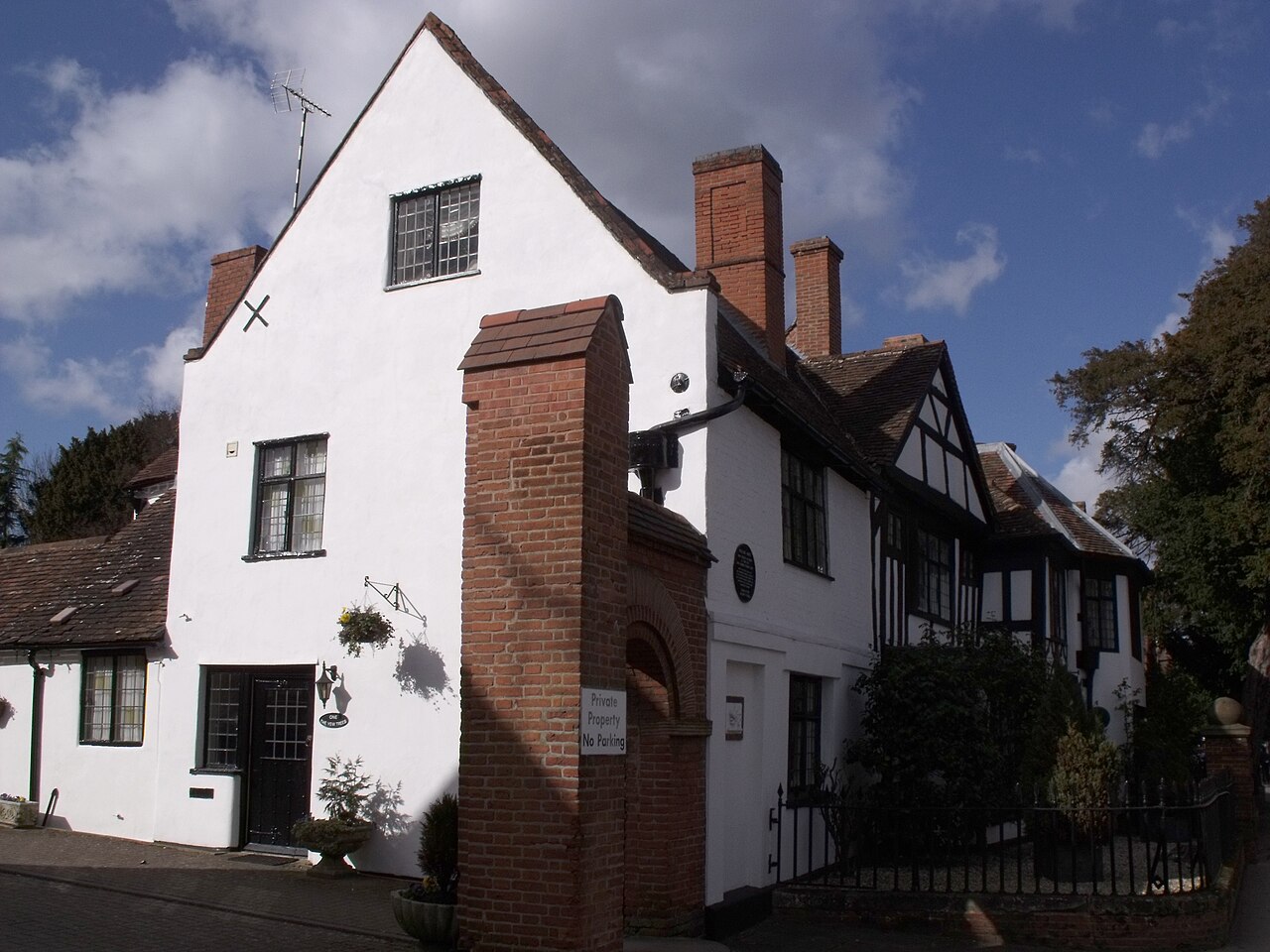
Photo: Elliott Brown, CC BY 2.0, via Wikimedia Commons.
.jpg)
What are the common mistakes?
Most problems are a missing property, a property filled with the wrong kind of value, or a decision left silently open.
- "Breathable" with no class. It cannot be checked. Ask for the V class and sd value to BS EN 1062-1.
- Acrylic paint on lime render. Many mainstream masonry paints exclude lime and natural renders. Use a coating its manufacturer confirms for lime.
- Only one side of the balance. A clause that asks only for water resistance can produce a coating that traps moisture. State both V and W classes.
- Painting in the wrong weather. Copy the manufacturer's temperature, dew point and rain limits into the clause so they can be enforced.
- Mixing manufacturers within a system. A primer from one and a topcoat from another voids the system data and the warranty. Keep all coats from one system.
- A silent default on colour. If the planning condition has not been discharged, say TBC with the reason so it is resolved before ordering.
How Avoice helps
Avoice's spec writer drafts masonry paint clauses from the elevations and schedules on the project and marks clearly what it could not settle.
- Drafts from your drawings and schedules
It reads the coating types (PT10 to rendered elevations, PT11 to the brick plinth) from the elevations and finishes schedule, picks the M60 coating clause or the Uniclass system and product headings, and fills in what your information supports.
- Leaves a TBC with a reason
If the colour is waiting on a planning condition, or nobody has confirmed whether the old render is lime, the line says TBC and why. Every TBC joins one project register to close before tender.
- Works from your own masters
Choose CAWS or Uniclass. Avoice adapts your practice's M60 clauses rather than replacing them with generic text.
- Checks the spec against the drawings
QA/QC flags a coating type on the elevations with no clause behind it, an acrylic masonry paint scheduled on an elevation the drawings note as lime render, or a clause that refers to a deleted preparation clause.
- Links product data to the clause
Data sheets, BS EN 1062-1 classifications and fire classification reports sit in the Product Room against the clause. Edit a linked product once and every clause that uses it updates. Approved Document B is to hand in the Avoice Regulations library.
Related guides: How to specify silicone render, How to specify lime plaster, How to specify emulsion paint.
Software can draft and check. The designer still chooses the product and is responsible for the specification.
Draft your masonry paint clause in Avoice
Upload your drawings and schedules. Avoice drafts the clause in CAWS or Uniclass, cites the standards and flags anything your information does not settle.
This guide is for general education and is not professional advice. Check current editions of standards and Approved Documents, the manufacturer's data, and the requirements of your project before relying on any clause.