
How to specify sealants
What a joint sealant clause has to say, the movement classes that make it checkable, the fire decisions that must come from the strategy, and how to write it in CAWS and in Uniclass.
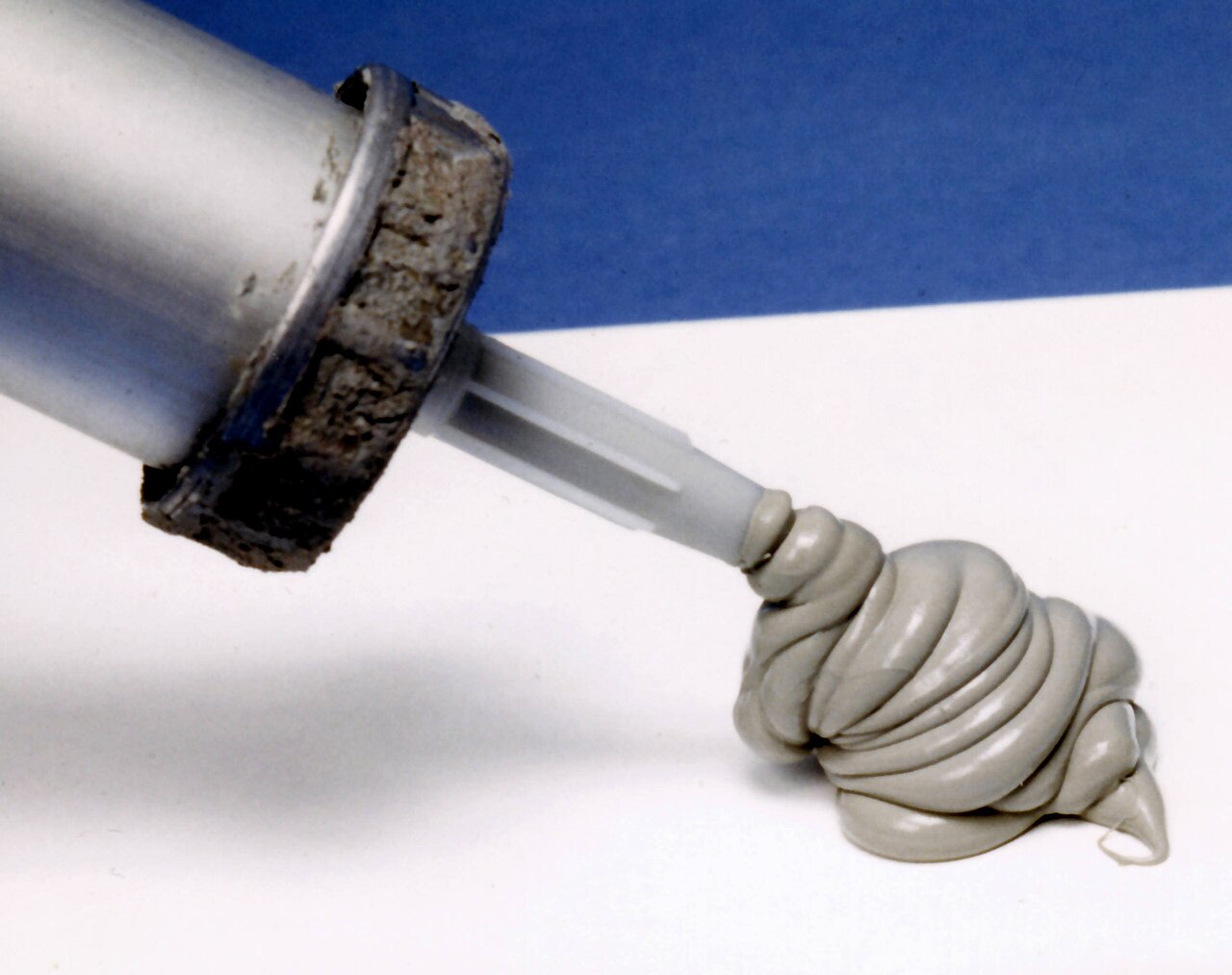
Photo: Achim Hering, CC BY 3.0, via Wikimedia Commons.

How do you specify sealants?
To specify a joint sealant, state its generic type and its classification to BS EN 15651 or BS EN ISO 11600 (for example F 25LM), chosen so its movement capability exceeds the calculated joint movement. Then give the joint design, backing rod, primer, colour and compatibility with the adjacent materials. Fire resistance and reaction to fire must come from the fire strategy and tested evidence, never from a default.
A sealant is one of the cheapest items on a façade and one of the most frequently replaced. When it fails, the cause is usually the joint rather than the product: a joint too narrow for the movement it has to take, sealant stuck to the back of the joint as well as the sides, a porous stone face that was never primed, or a silicone used where the decorator later needs to paint. "Low modulus sealant, colour to match" leaves all of those decisions with the applicator.
This guide covers what the clause needs for Uniclass Pr_30_31_76_16 Construction joint sealants. Uniclass also has codes for particular chemistries, such as Pr_30_31_76_77 Silicone construction joint sealants, and a separate code for firestop products, Pr_30_31_76_40 Intumescent firestop sealants, which should not be confused with a general-purpose joint sealant.
What does a sealant clause need to cover?
Some properties are specific to sealants. Others belong in every product clause. A clause that leaves either out gives the contractor room to substitute.
Properties of sealants
- Product typeSilicone, MS polymer, polyurethane, polysulfide, acrylic.
- Sealant classificationMovement class, e.g. F 25LM, above calculated movement.
- Joint designWidth and depth from movement, to BS 6213.
- CompatibilityNon-staining on stone; no attack on coatings or seals.
- PrimerManufacturer's primer for each substrate, especially porous ones.
- AccessoriesBacking rod or bond breaker to stop three-sided adhesion.
- DurabilityUV and weather resistance outside, service life expected.
- Mould resistanceFungicidal grade for kitchens, bathrooms, clinical areas.
- Acoustic performanceAcoustic sealant at separating wall and doorset perimeters.
- Fire resistanceNever guessTested to BS EN 1366-4 for the actual joint.
- Reaction to fire classificationNever guessEuroclass to BS EN 13501-1 where the fire strategy asks.
- VOC contentLow emission evidence for internal use and BREEAM.
- Application conditionsTemperature, moisture and joint condition limits at application.
- Third-party certificationIndependent certification, essential for fire-stopping sealants.
What every product clause needs
- Manufacturer and product referenceNamed sealant, or a type and classification description.
- Product standardBS EN 15651 part for the use, shown on the DoP.
- Installation methodManufacturer's instructions and BS 8000-16 workmanship.
- Technical submittalsData sheet, DoP and adhesion or compatibility test results.
- Operation and maintenance informationExpected life, inspection and replacement regime.
- MaterialGeneric chemistry sets movement, paintability and compatibility.
- SubstrateEach joint face, since adhesion depends on it.
- FinishColour and tooled profile; visible on every façade joint.
Uniclass Pr_30_31_76_16 Construction joint sealants. Not every property applies to every project; where one does not, say so rather than leaving it blank.
Fields marked Never guess (fire resistance and reaction to fire classification) depend on the project and should never be filled from a default or a previous job. If the information is not available yet, the clause should say so with a TBC and a reason.
Which decisions does the clause depend on?
Most properties follow from the product you choose. These depend on the project, so they need a decision from the designer before the clause is written.
- 01
Movement capability, from the calculated movement
MovementThe classification is only meaningful once the joint movement is known. Work out the movement first, from thermal and moisture movement of the panels or masonry either side and any structural movement, then choose a sealant whose movement capability exceeds it at the joint width drawn. BS EN ISO 11600 classes sealants by use, F for façade and G for glazing, and by movement capability, such as 25 or 20, with LM or HM for low or high modulus. A low modulus sealant puts less stress on weak or porous joint faces such as brick or stone.
How to decide
- Calculate the expected movement at each joint type, using the panel or wall length between joints.
- Choose a class whose movement capability exceeds that movement at the drawn joint width.
- On porous or weak faces such as brick, stone and render, choose low modulus.
- Cite the BS EN 15651 part that matches the use, so the declaration of performance covers it.
Write it asClassification: F 25LM to BS EN ISO 11600. Product standard: BS EN 15651-1, declaration of performance submitted. - 02
Choosing the chemistry
ChemistrySilicones have the best resistance to sunlight and weather, but paint will not stick to them, and ordinary grades can leave dark bands on porous stone as plasticisers migrate into it. MS polymer and polyurethane sealants can usually be overpainted and suit many façade and internal joints. Acrylic is for low-movement internal joints that will be decorated. Polysulfide is used where joints are trafficked or exposed to chemicals. The chemistry also decides which primers, coatings and adjacent seals the sealant is compatible with, so choose it first and the classification second.
How to decide
- If the joint will be painted, rule out silicone.
- Where either face is porous stone or pale masonry, ask for a non-staining grade and a trial on the actual material.
- Where the joint is trafficked or exposed to fuel or cleaning chemicals, consider polysulfide or a product tested for it.
- Check compatibility with coatings, gaskets and other sealants the joint touches.
Write it asProduct type: MS polymer, low modulus, non-staining on brick. Overpaintable. - 03
Joint width, depth and backing
JointA sealant only performs in a joint that has been sized for it. The width comes from the calculated movement and the sealant's movement capability. The depth comes from the manufacturer's width-to-depth ratio, which keeps the bead thin enough to stretch. A closed cell backing rod sets that depth and stops the sealant bonding to the back of the joint; where there is no room for a rod, a bond breaker tape does the same job. BS 6213 describes the method. Typical joints should be detailed on the drawings, not left to the applicator to infer.
How to decide
- Set the joint width from the movement calculation, and draw it on the elevations and details.
- Take the depth from the sealant manufacturer's width-to-depth ratio.
- Require a closed cell backing rod, or a bond breaker where the joint is too shallow for one.
- Check construction tolerances: a joint drawn at 10 mm may be built at 6 mm or 14 mm.
Write it asJoint design: Width as elevation drawings, depth to sealant manufacturer's ratio. Backing: Closed cell polyethylene rod; bond breaker tape where depth is limited. - 04
Fire-resisting joints
Never guessA joint in a compartment wall or floor, or at the edge of a compartment floor against the façade, has to keep the fire separation intact. That needs a product tested to BS EN 1366-4 as a linear joint seal and classified to BS EN 13501-2, for that joint width, depth, backing and supporting construction. Test evidence for a different joint does not carry across. A façade sealant gives no fire resistance unless it has been tested for that purpose, so fire-resisting joints should be specified separately, with the period taken from the fire strategy.
How to decide
- Mark the fire-resisting joints on the drawings using the compartmentation plans.
- Take the required period for each from the fire strategy.
- Ask for test evidence to BS EN 1366-4 covering the actual joint width, backing and wall or floor type.
- Write fire-resisting joints as a separate sealant type, not as a variant of the façade sealant.
Write it asFire resistance: EI 60 to BS EN 13501-2, tested to BS EN 1366-4 for the joint width and substrate as built. Submit test evidence. - 05
Reaction to fire
Never guessSealants declare a reaction to fire class under BS EN 15651, and many general-purpose sealants are class E or F. On external walls of relevant buildings, regulation 7(3) lists sealants and backer rods among the components exempt from the requirement for materials of class A2-s1,d0 or A1, so the façade sealant itself is not usually what limits the design. Internal linings and the project's fire strategy can still set a class for exposed sealant, and the clause should record that rather than leaving the field empty.
How to decide
- External walls of relevant buildings: check how regulation 7(2) and 7(3) apply to the build-up, and record the outcome.
- Internal joints in linings on escape routes: ask the fire engineer whether a class applies.
- Otherwise state the declared class from the declaration of performance.
Write it asReaction to fire: Declared class to BS EN 13501-1 as declaration of performance. External wall: exempt component under regulation 7(3), confirmed by fire engineer.
The values under "Write it as" are examples. The right value depends on the location, the use and the fire strategy.
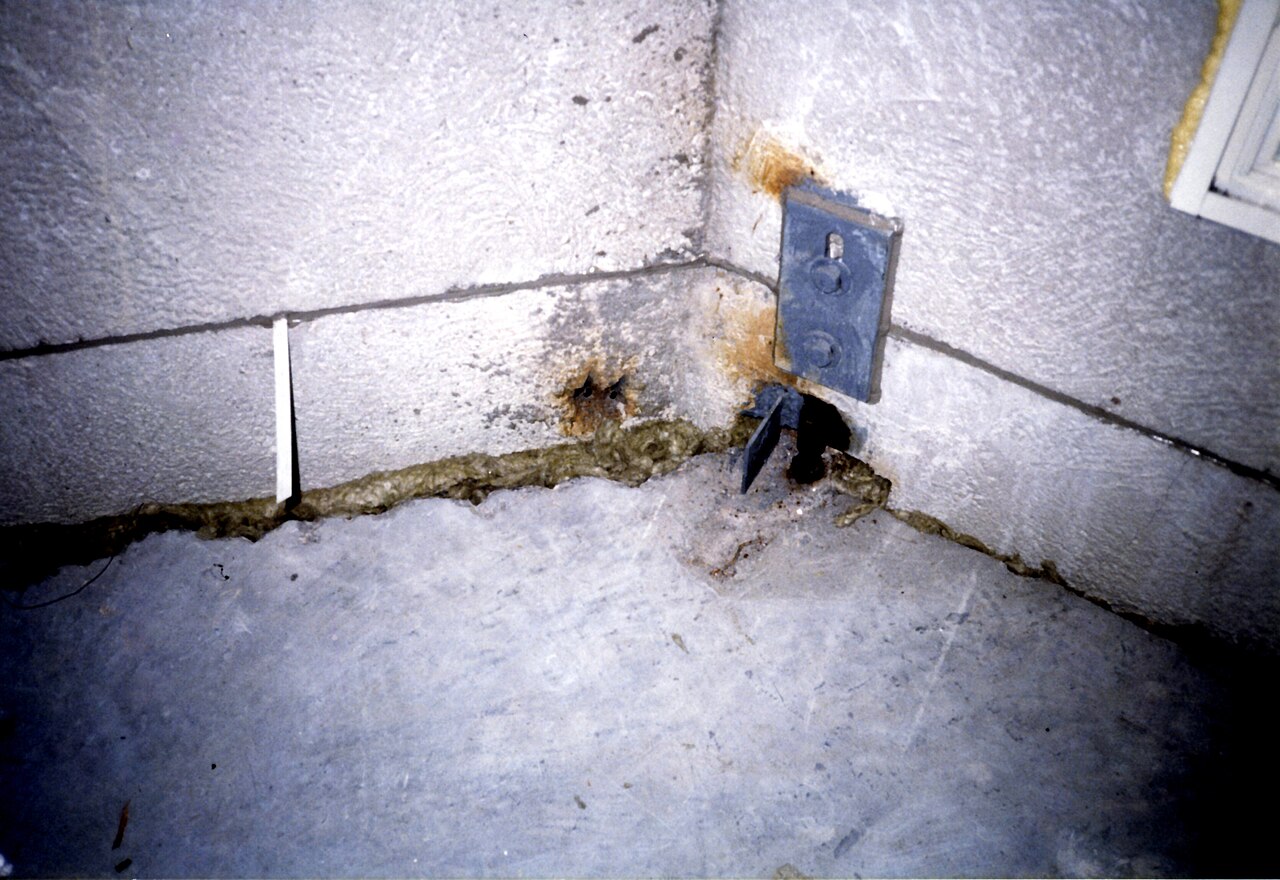
Photo: Achim Hering, CC BY 3.0, via Wikimedia Commons.

Which standards should the clause cite?
Cite the product standard the declaration of performance refers to, the code of practice for installation, and the test method behind each value you set. A value without its test method cannot be checked against a submittal.
- BS EN 15651 series
- Sealants for non-structural use in joints in buildings and pedestrian walkways
The product standard, split by use: Part 1 façade elements, Part 2 glazing, Part 3 sanitary joints, Part 4 pedestrian walkways.
In the clause Cite the part for the use: "Product standard: BS EN 15651-1" for a façade joint.
- BS EN ISO 11600
- Building construction. Jointing products. Classification and requirements for sealants
Classification by use (F for façade, G for glazing), movement capability and modulus.
In the clause "Classification: F 25LM to BS EN ISO 11600."
- BS 6213
- Selection of construction sealants. Guide
Guidance on choosing a sealant type and designing joint width and depth from the expected movement.
In the clause Use it for joint design: "Joint dimensions: designed in accordance with BS 6213".
- BS 8000-16
- Workmanship on building sites. Code of practice for sealing joints in buildings using sealants
Site work: joint preparation, priming, backing, application and tooling.
In the clause "Workmanship: to BS 8000-16 and the sealant manufacturer's instructions."
- BS EN 1366-4
- Fire resistance tests for service installations. Linear joint seals
The fire resistance test for linear joint seals, including the joint width, backing and supporting construction tested.
In the clause "Tested to BS EN 1366-4 for the joint width and substrate as built."
- BS EN 13501-2
- Fire classification of construction products and building elements. Classification using data from fire resistance and/or smoke control tests, excluding ventilation services
The E and EI classifications that come out of the fire resistance test.
In the clause "Fire resistance: EI 60 to BS EN 13501-2."
- BS EN 13501-1
- Fire classification of construction products and building elements. Classification using data from reaction to fire tests
The reaction to fire Euroclass a sealant declares.
In the clause "Reaction to fire: declared class to BS EN 13501-1."
Confirm the current edition of each standard at every issue. Avoice's State of UK Specifications 2026 found a withdrawn standard cited in 40% of specifications at contract issue.
For the regulations behind these choices, see Approved Document B explained, Fire strategy reports explained, or search the Avoice Regulations library.
How do you write it in CAWS?
In CAWS, sealants are handled by a reference section, Z22, together with the work sections where the joints occur. A curtain wall, a window section or the masonry section will have its own sealant joint clause that says which joints are sealed and with what, then refers to Z22 for preparing joints and applying sealant. Z22 itself is short. In recent NBS-format specifications it holds a products clause, 310 Joints, and the execution clauses that apply to every sealant on the job.
Practices use 310 in two ways. Some keep it as a single general clause for primers and backing. Others write one 310 clause for each sealant type, with a type mark, and point to it from the work sections. The second approach suits a project with several sealant types, because the façade, sanitary and fire-resisting sealants each get their own clearly identified clause.
- Description
- Vertical movement joints in facing brick outer leaf
- Manufacturer
- Submit proposals
- Product reference
- Submit proposals
- Product type
- MS polymer, low modulus, non-staining on brick
- Product standard
- BS EN 15651-1, declaration of performance submitted
- Classification
- F 25LM to BS EN ISO 11600
- Colour
- TBC To match mortar; mortar sample panel not yet approved. Resolve before ordering.
- Joint width
- As elevation drawings, sized for calculated movement
- Joint depth
- To sealant manufacturer's width-to-depth ratio
- Backing
- Closed cell polyethylene rod
- Bond breaker
- Tape, where joint depth does not allow a rod
- Primer
- As recommended by sealant manufacturer for brick
- Compatibility
- Adhesion and staining trial on project bricks before application
- Fire resistance
- Not a fire-resisting joint
- Application
- As clauses 610, 620 and 630
Illustrative, not from a real project. One property is left as a TBC with a reason so it can be tracked and closed before issue.
Clauses the type clause relies on
- Z22/610
- Suitability of joints Presealing checks that joint dimensions are within the sealant's limits and faces are sound.
- Z22/620
- Preparing joints Cleaning faces, masking adjacent surfaces and inserting backing without stretching or gaps.
- Z22/630
- Applying sealants Dry, frost-free faces, joints filled and tooled to the right profile, protection until cured.
Clause numbers vary between NBS versions and practice masters; the numbers here follow recent NBS-format specifications. Make sure the work section clauses that say "as section Z22" point to clauses that exist.
For more on clause structure and checks, see NBS clause writing: common mistakes.
How do you write it in Uniclass?
In Uniclass the sealant is a product used inside other systems, so its system clause is the one for the element where the joint sits. For movement joints in a brick outer leaf that is Ss_25_13_50_51 Masonry wall leaf systems. The system clause sets where the joints go, their spacing and width, and the performance of the sealed joint as part of the wall.
The product clause holds what the sealant is: its chemistry, standard, class and colour. A fire-resisting joint belongs to a different system, such as one under Ss_25_60_30 Fire-stopping systems, and points to its own tested firestop product, which keeps the two kinds of joint from being confused on site.
- Description
- Facing brick outer leaf with vertical movement joints
- Movement joints
- Positions as elevation drawings, spacing from movement calculation
- Joint width
- As elevation drawings, sized for calculated movement
- Joint filler
- Compressible filler, as masonry details
- Sealant
- Pr_30_31_76_16 Construction joint sealants (S01)
- Backing
- Closed cell polyethylene rod, depth to sealant manufacturer's ratio
- Workmanship
- To BS 8000-16
- Manufacturer
- Submit proposals
- Product reference
- Submit proposals
- Product type
- MS polymer, low modulus
- Product standard
- BS EN 15651-1
- Classification
- F 25LM to BS EN ISO 11600
- Colour
- TBC To match mortar; mortar sample panel not yet approved. Resolve before ordering.
- Primer
- As recommended by sealant manufacturer for brick
- Compatibility
- Non-staining on project bricks, trial submitted
- Reaction to fire
- Declared class to BS EN 13501-1
- Durability
- Manufacturer's expected service life submitted
Illustrative. Performance of the finished system sits in the system clause; properties of the product sit in the product clause.
In NBS Chorus, Uniclass product clauses also carry an NBS reference (for construction joint sealants, 45-55-75/315). Keep a specification in CAWS or in Uniclass throughout, rather than mixing the two.
What goes in the spec, and what goes in the schedule?
The specification defines each type once. The schedule and drawings say where each type goes.
In the specification
What the product is and how it performs and is installed. Written once per type.
In the schedule or drawings
Where each type goes and how much of it. Changes with every plan revision.
Write each sealant once as a product with a type mark (for example S01) and let the joint schedule and details say where it goes. A façade, a shower and a compartment wall need three different sealants, so one generic clause cannot cover them.
What are the common mistakes?
Most problems are a missing property, a property filled with the wrong kind of value, or a decision left silently open.
- "Low modulus sealant" with no class. Modulus is half a classification. Give the BS EN 15651 part and the movement class, such as F 25LM, so the submittal can be checked against the joint.
- No joint design. A sealant in a joint that is too narrow for the movement will tear, whatever its class. Size the joints and draw them.
- Three-sided adhesion. Without a backing rod or bond breaker the sealant sticks to the back of the joint and cannot stretch. Specify the backing.
- Ordinary silicone on porous stone. Plasticisers migrate and leave dark bands either side of the joint. Ask for a non-staining grade and a trial on the actual stone.
- A façade sealant used as fire-stopping. A general sealant has no fire resistance unless it has been tested for that joint. Specify the firestop product separately, with its BS EN 1366-4 evidence.
- Silicone where the joint will be painted. Paint will not hold on silicone. If decorators follow, choose a paintable chemistry and say so in the clause.
How Avoice helps
Avoice's spec writer drafts each sealant type from the joints on your drawings and shows which fire and movement decisions are still open.
- Drafts from your drawings and schedules
It reads the joint types from the elevations, details and door and window schedules, and writes a separate sealant clause for façade, sanitary, acoustic and fire-resisting joints instead of one generic line.
- Leaves a TBC where a decision is missing
If the joint movement has not been calculated, the fire period is not in the strategy yet, or the colour depends on a mortar panel, the clause says TBC with the reason, and the item goes into the project's TBC register to close before tender.
- Writes in CAWS or Uniclass
In CAWS it uses Z22 alongside the work sections; in Uniclass it writes the sealant as a product clause referenced from each system. Avoice adapts your practice's own master clauses.
- Checks joints across the set
QA/QC flags a compartment line on the fire plans with no fire-resisting joint specified, a work section that refers to a Z22 clause that is not there, a silicone in a joint the finishes schedule says is painted, and withdrawn standards.
- Keeps test evidence with the clause
Data sheets, declarations of performance and fire test evidence sit in the Product Room linked to the clause, so a substitute sealant can be checked against the class and the tested joint the clause asks for.
Related guides: How to specify natural stone tiles, How to specify ceramic tiles, How to specify fire doors.
Software can draft and check. The designer still chooses the product and is responsible for the specification.
For more on the evidence behind product choices, see the role of manufacturer product data in specification writing.
Draft your sealant clause in Avoice
Upload your drawings and schedules. Avoice drafts the clause in CAWS or Uniclass, cites the standards and flags anything your information does not settle.
This guide is for general education and is not professional advice. Check current editions of standards and Approved Documents, the manufacturer's data, and the requirements of your project before relying on any clause.